
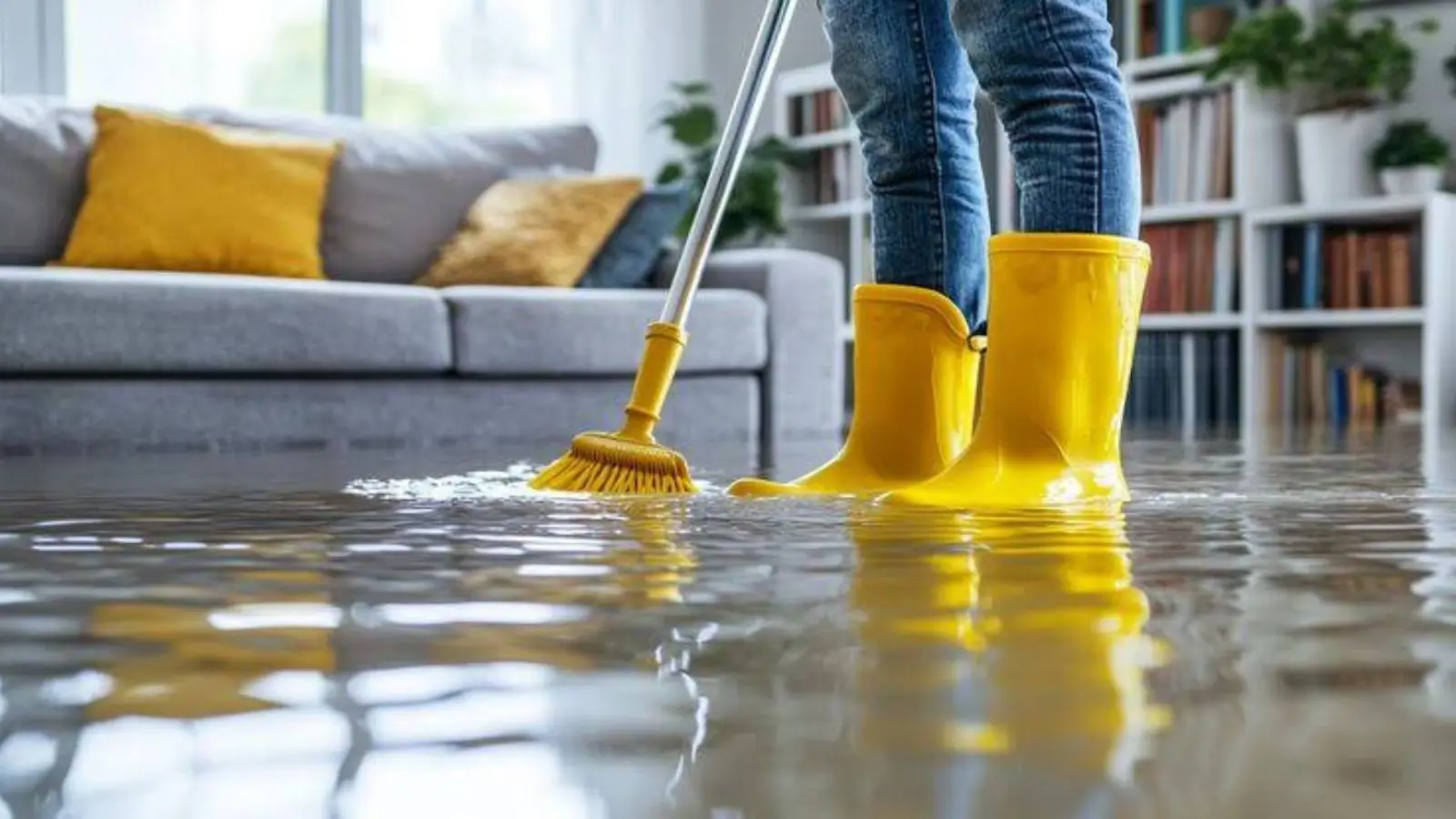
Say the words flood water in the San Fernando Valley and most people picture a street full of rain. In practice the phrase covers three very different events: runoff that pushes under a garage door or through a back slider during a winter storm, a water main or supply line that fails and sends clean water across the floor, and a sewer line that backs up through a shower drain or toilet.
They look alike on the carpet. They behave very differently once the water reaches the pad, the baseboards and the bottom of the drywall, and that difference decides what can be saved.
Floodwater and pipe water are sorted by how dirty they are
Restoration crews work from the ANSI/IICRC S500 water damage standard, which sorts water into three categories. Category 1 comes from a clean source such as a supply line. Category 2 carries contaminants, like a washing machine drain that overflowed. Category 3 is grossly contaminated: sewage, storm runoff that has crossed soil and pavement, or any water that has sat long enough to turn.
Time moves water down that scale. A clean supply-line leak that soaks a carpet pad for several days can drift toward Category 2, which is one reason crews ask when the water started before they ask anything else.
| Water source | Category | What usually happens |
|---|---|---|
| Burst supply line or water heater, caught within a day | Category 1 | Extraction, opened wall bases, air movers and LGR dehumidifiers. Many finishes can be dried in place. |
| Washing machine or dishwasher overflow | Category 2 | Extraction and cleaning. Carpet pad is usually removed, and hard surfaces are cleaned before drying. |
| Storm runoff entering a garage, door or slider | Category 3 | Treated as contaminated because it crossed soil and pavement. Carpet, pad and the lowest strip of drywall are commonly removed. |
| Street main break that reaches the yard and house | Category 3 once it crosses ground | Pump-out, removal of porous materials, cleaning and drying of what remains. |
| Sewer overflow through a floor drain or toilet | Category 3 | Stay out. Containment, removal of porous materials, disinfection and HEPA air scrubbing before any drying starts. |
Safe first steps while you wait for a crew
Start with electricity. If water is near outlets, a power strip or the panel, stay out of the room and call the utility or 911 before anything else. Switch circuits off at the panel only when you can reach it over dry ground. Then call (818) 337-2642, where the line is answered around the clock.
- For a main or service-line break, call LADWP at 1-800-DIAL-DWP (1-800-342-5397), which handles water trouble 24 hours a day.
- For a sewer overflow, call the LA Sanitation 24-hour line at 1-800-773-2489. The City lists sewage overflow as a 311 item, and 911 is for threats to life and safety.
- Wear rubber boots, gloves and goggles if you must enter, because storm and sewer water can carry contaminants.
- Photograph the water line, the rooms and every item before you move or discard anything.
- Lift furniture legs onto foil or blocks and carry small valuables to dry ground.
- Keep children and pets out, and do not run a household vacuum on wet floors.
Do not open walls or pull out soaked flooring from a Category 3 loss on your own. Crews set containment barriers first so the contaminated dust and spray stay in one room, and they wear respirators rated for the job.
Water still moving through the house?
Call (818) 337-2642 at any hour and say where the water came from. The dispatcher will talk you through what to do until a crew gets there.
What happens to the house after the water is out
After pump-out, a crew maps moisture with a pin or pinless meter and a thermal imaging camera, removes materials that cannot be cleaned, and sets air movers and dehumidifiers on a drying plan. The goal is a dry structure measured against readings from unaffected rooms, not a floor that merely feels dry.
Our flood damage restoration work follows this order, and emergency water removal covers the first pump-out step when standing water is deep. The same crews also reach neighbors in Woodland Hills and Canoga Park.
Sandbags, road closures and flood coverage near West Hills
LAFD offers ready-to-fill sandbags all year at its neighborhood stations, capped at 25 for each household. The West Hills sand site is Fire Station 106 at 23004 Roscoe Boulevard, and LAFD asks you to call ahead. LAFD does not fill, deliver, place or remove the bags, so plan a shovel, a helper and the doorways you want to protect before rain is forecast.
During the February 2024 storms, the City's storm response page listed a flooding closure on Valley Circle Boulevard that ran from Woolsey Canyon to Chatlake Drive. That page does not name West Hills, so read it as a reminder that roads on the community's edge can close in heavy rain, not as a statement about any single street or house.
To see whether your own address sits in a mapped flood zone, use Address Search at the FEMA Flood Map Service Center (msc.fema.gov), or call 1-877-FEMA-MAP. We found no FEMA statement about Bell Creek or Dayton Creek, so the address search is the only reliable answer.
The California Department of Insurance says standard homeowners insurance does not cover flood damage, and typical policies also leave out mudslides and debris flows. A separate flood policy, federal (NFIP) or private, is the usual route, and it generally starts 30 days after you buy it. Buying one after the forecast is too late.
Source: LAFD sandbag page and February 2024 storm update, FEMA Flood Map Service Center, California Department of Insurance Flood Facts
Keep this list before anything goes in the dumpster
- Wide photos of each room with the water line visible, then close-ups of damaged items.
- Brand and model details for electronics and appliances that got wet.
- Receipts for any temporary repairs, sandbags or tarps you paid for.
- A written log of every call to the utility, the City and your insurer.
- Any damaged item the adjuster asked you to hold until it was seen.
Flood water questions from West Hills homeowners
Where do I get sandbags in West Hills, and will the fire department place them?
LAFD lists West Hills Fire Station 106 at 23004 Roscoe Boulevard as a sand site, with ready-to-fill bags offered at neighborhood stations up to 25 per household. Call ahead before you drive over. LAFD does not fill, deliver, install or remove sandbags, so you or a helper will need to fill and place them yourselves.
Is storm runoff in my garage treated as Category 3?
Usually yes, because the water has crossed soil, pavement and yard debris before it reached you. Crews often remove carpet, pad and the lowest strip of drywall, then clean and dry what remains. A thin film that dries on sealed concrete may be handled more simply, so describe exactly what got wet when you call (818) 337-2642.
Does homeowners insurance cover flood water?
Standard homeowners policies generally exclude flood, and typical policies also leave out mudslides and debris flows. A sudden pipe failure inside the house is treated differently from rising outside water, so the source matters. Check your policy and ask your insurer which kind of event yours was before you decide on repairs.
Who do I call when a water main breaks in front of my house?
Call LADWP at 1-800-DIAL-DWP (1-800-342-5397), the 24-hour line for water trouble. If the water has already entered the house, also call the restoration line so extraction and drying can start while the utility works on the main. Photograph the street and the interior for your records.
How soon does wet drywall need to come out after a flood?
Clean-water drywall can often be dried in place if it is treated within a day or two, because EPA guidance points to a 24 to 48 hour window before mold becomes a concern. Drywall soaked by Category 3 water is normally cut out regardless of timing. A moisture meter reading settles it better than touch.
Can I clean up sewage water myself?
It is not recommended. Sewage water carries contaminants, and porous materials like carpet and pad cannot be disinfected in place. Crews use containment, protective gear and HEPA air scrubbers for this work. Health questions after exposure belong with your physician.