
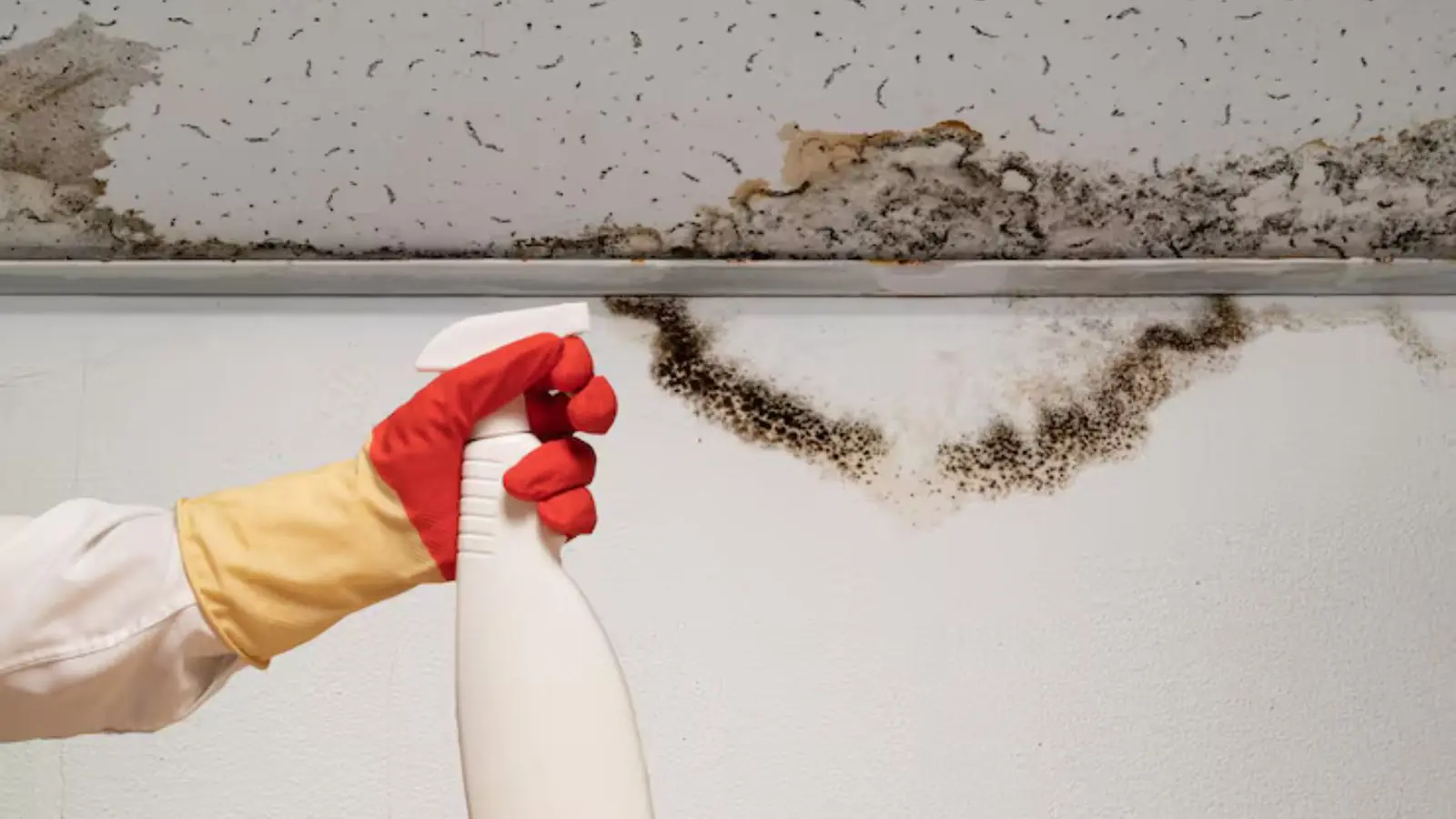
A common call goes like this. The plumber replaced a cracked supply line under the bathroom sink last week, the drip is gone, and now the vanity smells like a wet basement. Behind the toe-kick there is a dark patch along the wall, and the cabinet floor feels soft when pressed.
Mold needs moisture, and a bathroom leak supplies it in places nobody looks. The visible part is usually a small portion of what is wet. Fixing the pipe stops new water, but it does not dry what already soaked in.
Where bathroom leaks hide
Under the vanity
A weeping supply line, a loose drain trap or a cracked shutoff valve drips onto the cabinet floor. Particleboard swells and softens, and moisture creeps into the wall behind it.
Around the toilet base
A failed wax ring or a loose supply connection lets small amounts of water reach the subfloor each flush. Look for a stained or lifted floor edge, a rocking toilet or a stain in the ceiling below if the bathroom is on an upper floor.
Inside the wall
A pinhole in a supply pipe or a leaking valve behind a tile or drywall surface can run for months. Paint bubbles, loose caulk and a musty smell near the baseboard are the common clues.
Under the shower pan or tub
Not a toilet or sink source, but the same checks apply. A slow leak at the drain or a failed seal can soak the framing for a long time before a stain appears.
What to check before you call
- Press the cabinet floor and the toe-kick with a finger. Soft or swollen material means it has been wet for a while.
- Run the sink and flush the toilet, then wipe each connection with dry tissue to catch slow drips.
- Look for peeling paint, bubbled drywall, lifted vinyl or discolored grout near the wall base.
- Check the ceiling in the room below for a brown ring or sagging.
- Shut off every water use in the house, then watch the meter's leak indicator. LADWP says movement with everything off means a leak somewhere.
If the answers point to a wet wall or subfloor, call. A crew can find wet areas with a moisture meter and a thermal imaging camera without tearing anything open, and they will tell you if the readings are high enough to open the wall.
How long before it becomes a mold problem
EPA's guide on moisture says to get a wet area dry inside 24 to 48 hours if you want to head off mold. A leak that ran for weeks has already passed that window, which is why the cabinet floor and the wall base are the first places to check.
Mold is not something to guess at. Testing and removal follow the ANSI/IICRC S520 standard, and any question about how mold affects a person belongs with a physician. What a restoration crew can tell you is where the moisture is and what has to be removed.
| What you notice | What it suggests | What to do |
|---|---|---|
| Musty smell near the vanity | Moisture trapped in cabinet or wall | Meter the cabinet floor and wall base. Dry or remove affected material. |
| Dark patch behind the toe-kick | Wet drywall or framing at the base | Do not scrub it. Have it checked and photographed first. |
| Soft cabinet floor | Particleboard has absorbed water for some time | Replace the affected cabinet parts after drying. |
| Bubbled paint above the baseboard | Water wicking up the wall | Open a small inspection hole and meter the cavity. |
| Ceiling stain below the bathroom | Water traveled through the floor | Call before the ceiling sags. See our guide on ceiling damage. |
Smell after a leak, but nothing to see?
Call (818) 337-2642 and describe where the pipe leaked. We can tell you what a meter check would look for and what the next step is.
What the cleanup actually involves
The work starts with fixing the source. After that, a crew sets up containment barriers around the area, removes wet or affected material and uses HEPA air scrubbers to keep dust from moving through the house. Remaining surfaces are cleaned and dried to meter targets before anything is rebuilt.
Our mold remediation service handles that work. When the leak has soaked the structure, water damage cleanup comes first to remove water and dry the area. Nobody can promise mold stays gone if moisture returns, so a lasting fix means checking the plumbing and keeping humidity down.
Insurance and rental rules in California
State insurance guidance (California Department of Insurance) says mold that results from a covered peril may be covered by a homeowners policy. Its claims guide also cautions that a slow leak may already have mold, and tells you to phone the adjuster before you clean it yourself. The same department's residential guide generally excludes seepage, wear and tear and neglect, so a drip hidden for months can be handled differently from a sudden burst.
That is why dates and photos matter. Photograph the damage before you remove anything, keep receipts for temporary repairs and ask your insurer what applies to your loss. Read the exclusions in your own policy.
Renters have a separate path. The California Department of Public Health (CDPH) mold booklet tells tenants that owners must supply a livable, healthy unit and must repair dampness or visible mold when it becomes a hazard. Tell your landlord or manager about the leak. Since January 1, 2022, rental housing providers also hand prospective tenants the booklet, though CDPH says it does not enforce these rules or inspect homes.
Source: California Department of Insurance residential claims guide and Residential Insurance guide, CDPH mold booklet
Homes in Canoga Park and Chatsworth get the same calls, and the same rules apply there for owners and tenants.
Bathroom leak and mold questions
I rent in West Hills. Who deals with mold from a toilet leak?
Tell your landlord or property manager as soon as you notice the leak or smell. The CDPH booklet says owners must keep a rental livable and fix dampness or visible mold when it becomes a hazard. Photograph everything, and keep your own messages. Renters insurance may cover belongings, so ask your insurer.
Should I call my insurer before cleaning up mold from a slow leak?
Yes. State insurance guidance is to call the adjuster before you clean mold from a slow-leak loss, and to keep damaged items until the adjuster says otherwise. Coverage depends on your policy and on whether the damage was sudden or gradual.
Can I wipe the mold off myself?
A small patch on a hard, nonporous surface can usually be cleaned, as long as the moisture source is fixed. Anything on drywall, inside a cabinet, behind a wall or in a larger area needs a professional assessment. Wear gloves and a mask, and never mix bleach and ammonia.
How do I know if the wall behind the toilet is wet?
A moisture meter is the reliable way. Signs you can see include a stain, bubbling paint, soft baseboard and a musty smell. A crew can often check without opening the wall, then cut a small inspection hole if readings are high.
Will mold return after remediation?
No one can promise it will not. Mold grows where moisture stays, so the plumbing fix, drying and humidity control matter as much as the removal. Keep an eye on the area and report any new stain or smell right away.