
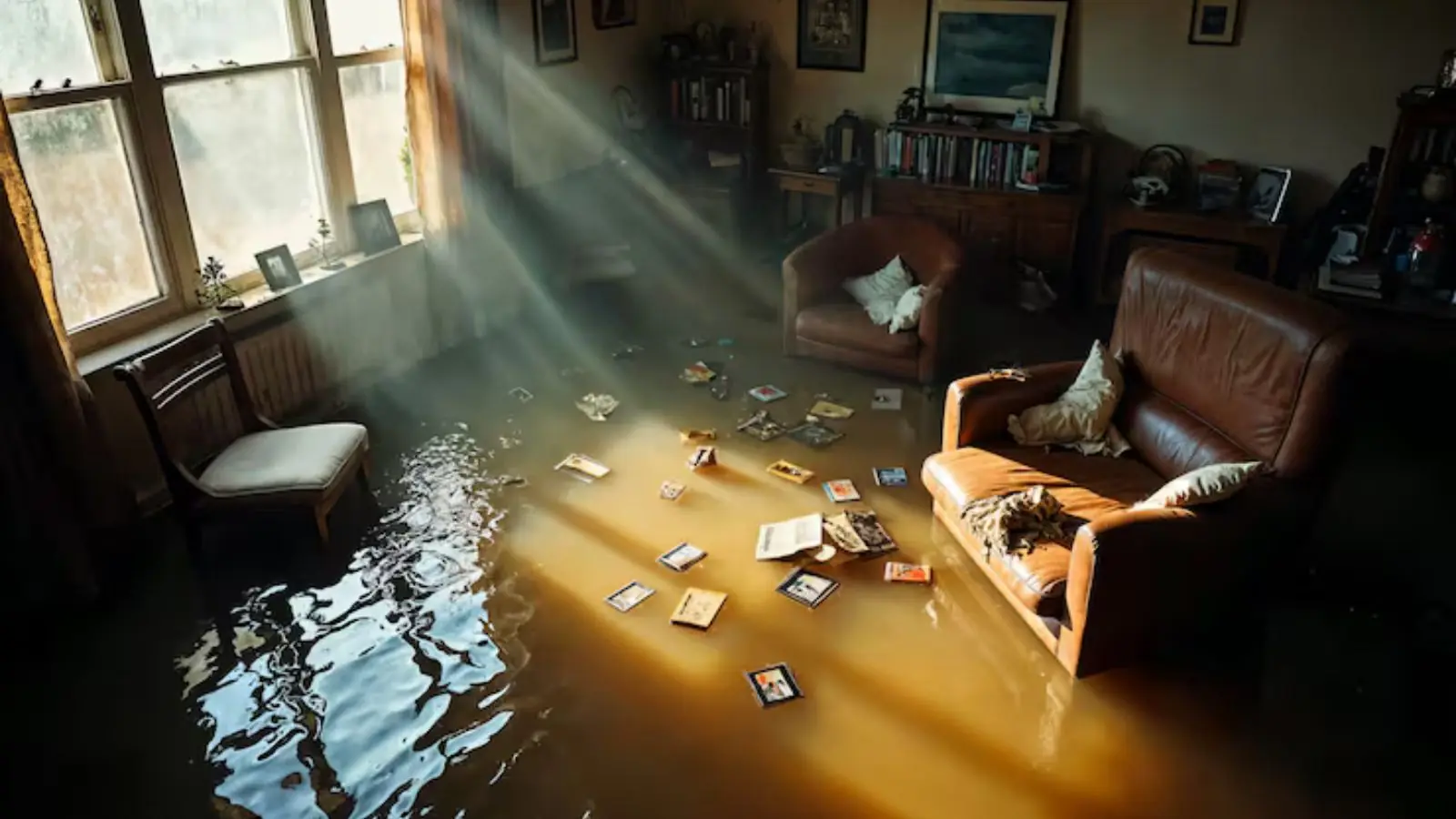
Whose loss is it when water comes through the ceiling?
The California Department of Insurance (CDI) says renters insurance protects your personal belongings and your liability when you rent a home, condo or apartment. The building is a different matter. CDI's residential guide notes that the landlord does not insure a tenant's personal property. In plain terms, the soaked sofa and the dead laptop are usually on your side of the line, while wet drywall, subfloor and ceiling framing belong to the owner's side.
West Hills makes this question common. The City's 1999 community plan calls the neighborhood primarily single-family, so plenty of rentals here are whole houses with an individual owner, not units with an on-site manager. If a supply line fails in a rented house, there may be nobody upstairs to blame and nobody down the hall to knock on. You will be texting a landlord and deciding quickly.
What a renters policy lists, and what it leaves out
CDI's renters guide names several parts of a typical policy. The table below pairs each with a water example. Treat it as a map of questions to ask, not a promise of payment, because your own contract sets the limits, the deductible and the exclusions.
| Policy part (per CDI) | What it is for | Water example |
|---|---|---|
| Personal belongings | Your things inside the rental | Wet couch, bedding, TV, boxes stored on a closet floor |
| Loss of use | Listed by CDI among covered damage | Short-term housing if the unit cannot be lived in during drying |
| Liability | Harm to others or their property | A tub you left running that soaks a neighbor's ceiling |
| Water backup | Listed by CDI among covered damage | A drain line pushing water up through a tub or floor drain |
| Flood | Generally not provided in a renters policy | Storm runoff entering at a door needs separate flood coverage |
The cause of the water matters as much as the policy part. In its residential guide, CDI puts sudden, accidental water damage on the covered list and puts seepage or slow leaks on the excluded list. It also tells readers to read the exclusions in their contract. A pipe that bursts overnight is a different story from a drip behind a wall that went unnoticed for months.
Your first day: a tenant's checklist
Stop what you can reach
Close the valve under the fixture, or the main valve if you know where it is. Keep away from wet outlets and call the landlord if the panel is in a wet area.
Tell the landlord right away
Text or email so there is a time stamp. Say where the water is, how far it has spread and what you have already shut off.
Photograph before you move anything
Shoot wide room views, then close-ups of the stain, the source and each damaged item, including labels and serial plates.
Build the inventory
CDI's claims guide wants each damaged item listed by brand and model, with room-by-room video of your things. Save receipts for hotel stays and meals.
Keep the damaged items
Hold on to what the water ruined. CDI's claims guide asks you to wait for the adjuster's go-ahead before discarding anything.
What the landlord has to do, and what they do not
The California Department of Public Health (CDPH) publishes a mold booklet for renters. It says owners owe tenants a livable, healthy unit and have to correct dampness or visible mold once it becomes a hazard. Telling the owner or manager is the step it points to, and it does not call for written notice. That is a duty about the building, not a promise to replace what you own.
If the landlord sends a restoration crew, ask which rooms will be opened, which materials are coming out, and when the dehumidifiers and air movers will be removed. Moisture meters and thermal imaging should show whether walls are dry before they are closed. A tenant who asks these questions early usually gets straighter answers than one who waits until the baseboards swell.
Do not wait on the paperwork to protect your things
Lift furniture off wet carpet, pull electronics out of the room and put foil or wood blocks under table legs. These small steps limit the loss whatever your policy ends up paying.
Rainwater at the door is a flood question
Water that comes in from the yard during a storm is flood, not a pipe failure. CDI's flood facts page says standard homeowners coverage does not cover flood damage, and the residential guide says the same for renters policies. CDI adds that a flood policy generally starts 30 days after you buy it, so it cannot be bought once the rain has started. Check the FEMA Flood Map Service Center for your address if you are unsure.
Water on the floor of a rental right now?
A dispatcher takes the details at any hour. Pricing and scope are laid out before a crew touches anything.
Once the source is stopped, standing water has to come out fast. Pulling it out with emergency water extraction limits how far it wicks into carpet pad and baseboards. After that, water mitigation and structural drying brings walls and floors back to dry readings. Tenants in nearby apartments and houses reach the same crews, including renters in Canoga Park and Woodland Hills.
What California's regulator says tenants should know
CDI's renters guide says renters insurance protects personal belongings and liability, and lists loss of use, medical payments to others and water backup among covered damage. Read that as a menu of coverage parts to look for in your policy, then check each against your contract.
CDI's residential guide says flood losses are generally not part of a homeowners or renters policy, and that a landlord does not insure the tenant's personal property. For a West Hills renter, that means two separate checks: your own policy for your belongings, and the landlord for the building.
Source: California Department of Insurance, Renters Insurance guide and Residential Insurance guide
Questions West Hills tenants ask about water damage and insurance
Is renters insurance worth having if I rent a single-family house in West Hills?
Yes, it is worth pricing out. The City's community plan calls West Hills primarily single-family, so many tenants here rent whole houses. The owner's insurance is meant for the building, and CDI says the landlord does not insure your personal property. Your clothes, furniture and electronics are exposed either way, and a renters policy is the usual way to cover them. Compare limits and deductibles.
Does my landlord's insurance replace my belongings?
Generally no. CDI's residential guide says the landlord does not insure the tenant's personal property. The landlord's policy is aimed at the structure, so a tenant who wants belongings covered needs a renters policy. Ask your landlord what repairs they will handle and in what order.
Does renters insurance cover a burst pipe?
It may, depending on your contract. CDI treats sudden, accidental water damage as covered and seepage or slow leaks as excluded. A pipe that bursts overnight sits on the sudden side. Read your exclusions, report the loss promptly and ask your insurer how your policy treats it. Nobody can promise coverage before the claim is read.
Is sewer or drain backup covered?
CDI's renters guide names water backup among covered damage, which does not mean every policy pays for every backup. Look for the water backup wording in your policy, check any sublimit and ask your insurer. If sewage is involved, stay out of the area and call a restoration crew, because that water is treated as contaminated.
Should I start cleaning before anyone calls me back?
Stop the source, protect your belongings and take photos first. Then dry what you safely can. CDI's claims guide asks you to hold damaged items until told otherwise. Leave removal of wet drywall and carpet pad to the landlord's crew or a restoration firm, and call (818) 337-2642 if you need standing water pulled out tonight.