
Water around the heater: the first ten minutes
A water heater is a tank that holds a fixed volume of water under pressure, and a split seam or failed fitting empties much of that tank onto the floor. If the water is spreading, your goal is to cut the supply, cut the energy and keep the water from reaching wet-sensitive rooms. Call (818) 337-2642 if you want a crew heading your way while you work, and do the steps below in this order.
Gas smell or sparks? Leave first
If you smell gas, hear a hiss near a gas heater or see water around an electrical panel, get everyone out. Call your gas utility or 911 before the restoration line. Do not flip switches in a wet area.
Turn off the energy
For an electric heater, use its breaker only when the panel is dry and easy to reach. For gas, turn the control to off or pilot. If anything about this feels unsafe, stop.
Close the cold supply
Find the shutoff valve on the cold pipe above the tank and turn it clockwise. If it is stuck or leaking, close the main water valve for the house.
Open a hot tap
Open a hot faucet somewhere upstairs. This lets air in so the tank can drain and takes pressure off the leak.
Drain the tank if it is still leaking
Attach a garden hose to the drain valve near the bottom, run the hose outdoors or to a floor drain and open the valve. The water inside may be hot enough to scald, so wait if the tank is steaming.
Stop the spread
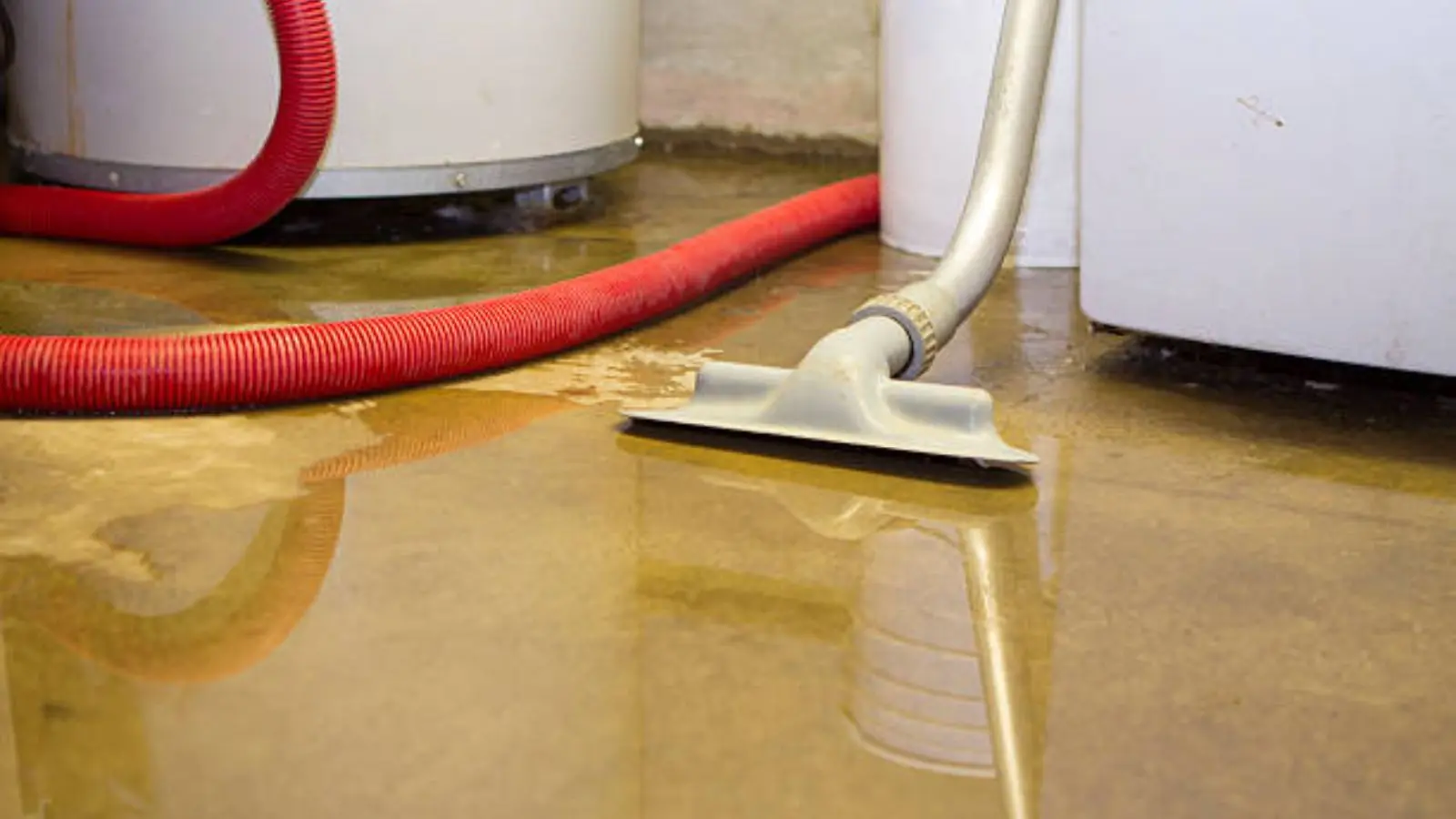
Squeegee or wet-vac standing water, lift boxes and stored items off the floor and set a towel dam at doorways. Photograph the tank, the label and everything wet before you move it.
Is it the heater, or something upstream?
Not every puddle near the tank comes from the tank. A loose cold-water connector, a failed relief valve line or a pipe leak inside a wall can wet the same floor. LADWP tells customers to close every tap and outdoor water use, then read the leak indicator on the meter. A moving indicator with nothing running means water is escaping. Do that test only after the heater is isolated, so you can tell a tank leak from a line leak.
Closet versus garage: where the water goes
The install location decides how much of the house is involved. A heater in a hallway or bedroom closet sits next to finished materials. One in a garage sits on a slab, with a shared wall into the house.
| Install location | Where the water travels | What to dry or pull |
|---|---|---|
| Hall or bedroom closet | Under the door into carpet, up into drywall and baseboards | Wet carpet and pad, bottom of closet walls, baseboards, door jambs |
| Garage corner | Across the slab, under the shared wall into the house | Stored boxes, bottom plate and drywall on the shared wall, flooring on the other side |
| Laundry room or utility closet | Along vinyl or tile seams and into cabinet bases | Cabinet toe kicks, subfloor under seams, adjacent wall bases |
| Side-yard or exterior closet | Out through the door and along the foundation | Stucco base, bottom of the house wall, any stored items |
Water from a failed heater arrives hot or warm and spreads fast, then keeps going by capillary action into drywall, framing and carpet pad. That is why a floor that looks fine an hour later can still be wet at the baseboard. Moisture meters read the inside of a wall, and a thermal imaging camera shows cooler wet patches behind finished surfaces.
What gets dried, and what gets pulled
A crew starts with emergency water removal, extracting standing water with truck-mounted or portable units. Then water mitigation sets air movers and LGR dehumidifiers and tracks the readings daily until the materials are back to dry. How many days that takes depends on what got wet, how long it stayed wet and how much equipment the space can hold.
- Carpet pad is usually pulled even when the carpet itself can be dried, because pad holds water.
- Drywall that stayed wet or has swollen is cut out in a straight line above the wet mark.
- Baseboards are often removed and reset so the wall behind can breathe.
- Stored cardboard in a garage is a loss in most cases. Photograph it first.
- The heater itself is not a restoration item. A licensed plumber replaces or repairs it.
Heater flooded the closet or garage?
A crew can be sent day or night when available. Before any equipment is set, you hear the scope and the price.
Insurance: sudden break versus slow drip
CDI's residential guide sorts losses two ways. Sudden, accidental water damage is on the covered list, while seepage, leaks, wear and tear and maintenance problems are on the excluded list. A tank that splits overnight tends to sit on the sudden side. A drip that has been rotting a closet floor for months tends not to. Your policy wording decides, so report the loss, keep receipts and ask your insurer.
If the leak also reached a neighbor's side or a shared wall, tell your insurer that on the first call. CDI's claims guide says to make prompt temporary repairs to stop more damage and to keep the receipts. The same steps apply for homes served from our dispatch near Winnetka and Canoga Park.
Permits and licences for a water heater swap
LADBS, the city building department, puts water heater replacement on the Express Permits list of work with no plan check. That does not mean no permit. The permit is still pulled, only without the plan check step. Ask whoever replaces your heater to pull it, and ask for the permit number.
The Contractors State License Board says a project whose labor and materials reach $1,000 needs a licensed contractor. A 2025 law raised that line from $500. CSLB's page also ties licensing to permit work, so check a plumber's licence status before signing.
Source: City of Los Angeles Department of Building and Safety, Express Permits bulletin, and Contractors State License Board, licensing threshold bulletin
Water heater leak questions for West Hills homeowners
Do I need a permit to replace a water heater in West Hills?
Usually yes. LADBS lists water heater replacement as an express item, which skips plan check but not the permit itself. Your plumber should handle it, but ask for the permit number. For your exact address and any special case, such as moving the heater, call the city building department before work begins.
Should I turn off the water heater or the water first?
Energy first if it is safe, then water. Flip the breaker only at a dry panel, or set the gas control to off or pilot, then close the cold supply valve above the tank. If you smell gas or the panel is wet, leave and call your gas utility or 911 before anyone else.
How long will it take to dry out after a heater flood?
Usually a few days for a closet and an adjoining room, longer for saturated drywall, flooring and a garage shared wall. A crew tracks moisture readings daily and removes equipment when the materials are dry. Industry estimates run from days to a couple of weeks depending on what got wet, so ask for the reading targets before work starts.
Does homeowners insurance cover a leaking water heater?
It depends on your policy and how the leak happened. CDI's guide lists sudden, accidental water damage as covered and seepage, leaks and wear and tear as excluded. A tank that fails suddenly is treated differently from a slow drip. Report promptly, photograph the heater and keep receipts for temporary repairs.
Can I run the heater again after the leak is fixed?
Only after a licensed plumber has found the cause and confirmed the tank or fitting is sound. A tank that split will not stop leaking when you refill it. If the problem was a fitting, replace it first. Meanwhile, ask a crew to check the floor before the area is closed up. Call (818) 337-2642 if the closet or garage is still wet.