
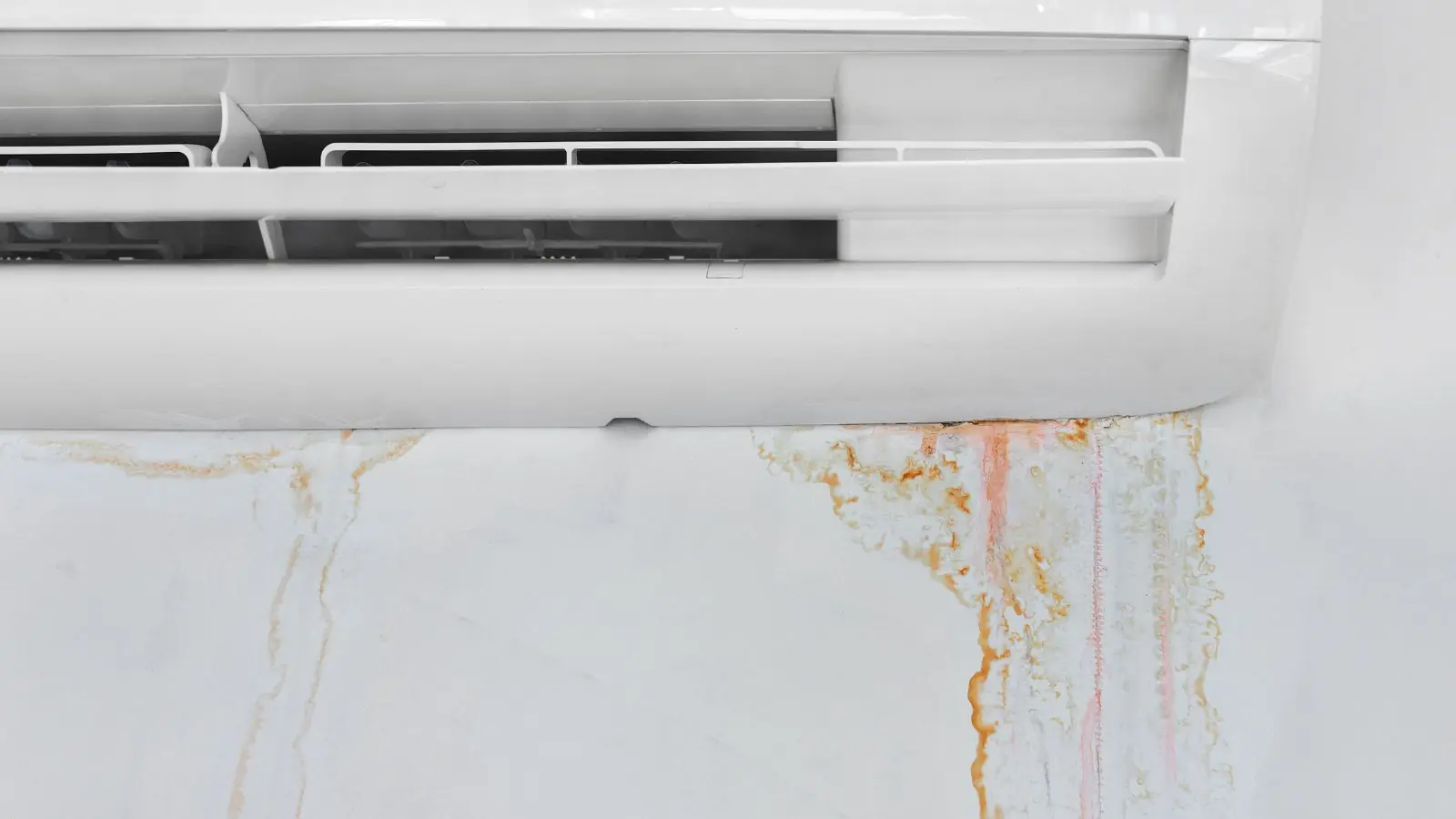
AC leak water damage happens when condensation from an air conditioner escapes its drain path and soaks the ceiling, closet or wall near the unit. It is not a rain leak and it is not a plumbing burst. The water comes from the cooling coil, so it grows as the system runs. If you see a stain under the air handler, switch the AC off and call (818) 337-2642.
Why an air conditioner makes water at all
On a hot day a central system can pull a surprising amount of moisture from the air as the cold coil cools it. The water falls into a drain pan, then a condensate line carries it off to a drain or outdoors. Nothing is wrong when it works. It is only a leak when the path is blocked, cracked or tilted the wrong way.
The usual failures are simple. A clog of algae slime in the line sends water back to the pan, and a full pan overflows. A rusted or cracked pan leaks straight down. A float switch is a small safety device that shuts the system off when the pan fills, and it can fail. Each failure lets water out at a different place.
Attic, garage and hall closets: where the leak lands
The air handler location decides what gets wet. When the unit sits in an attic, water goes through the ceiling drywall and insulation and shows as a brown ring on the ceiling below. That is a long path, so the stain usually means the attic is already soaked. A unit in a garage closet sends water across the slab or into the closet wall.
A hall closet unit on the ground floor wets carpet, baseboards and the lower wall. On a second floor it soaks the subfloor and drops water into the room below. In many homes the drain pan and line run out of sight, so the first clue is often a stain, a soft patch or a smell, not a drip.
| Unit location | First sign | Material at risk |
|---|---|---|
| Attic | Brown or yellow ring on a ceiling | Ceiling drywall, blown insulation, joists |
| Garage closet | Damp wall base, wet slab beside the closet | Closet drywall, baseboard, stored items |
| Hall closet, ground floor | Carpet damp at the closet door | Carpet and pad, wall base |
| Upstairs closet | Ceiling stain in the room below | Subfloor, ceiling below, wall cavity |
Signs of an AC leak that you can see and smell
- A round or oval ceiling stain that darkens when the system has been running.
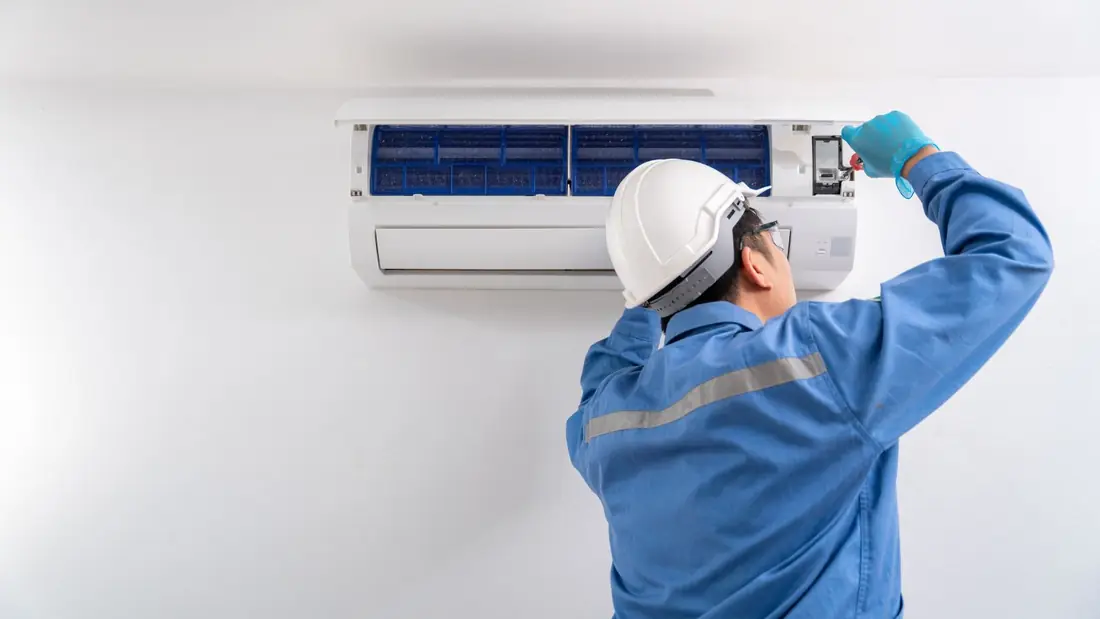
- A drain pan with standing water, rust at the edges or a crusty white line.
- Drywall near the closet that feels soft, or paint that bubbles at the bottom.
- A musty smell in the hall or bedroom near the air handler.
- An AC that quits in hot weather, since a tripped float switch looks like a dead system.
A stain that grows during hot afternoons and shrinks overnight points to condensate, because it follows the compressor cycle. A stain that grows after rain points to the roof. If you are unsure, the crew checks the ceiling with meters and thermal imaging, and the HVAC technician checks the drain line.
First-hour safety steps for an AC leak
- Turn the thermostat to off, then switch the air handler breaker off. A running system keeps making water.
- Stay out from under a bulging ceiling. A bulge holds a pail of trapped water and can drop without warning.
- Water near a light fixture or outlet means cutting that circuit, but only from a dry panel. Sparks or a burning smell mean 911.
- Place a bucket and towels under the drip. Take photos and a short video of the stain, the pan and the unit label.
- Lift stored items off the closet floor and keep kids and pets out of the area.
Do not climb into a hot attic to look at the unit. Attic heat is dangerous in summer and the floor between joists will not hold you. The crew and the HVAC technician are equipped for it.
Who fixes what: HVAC trade versus restoration crew
This is the point most homeowners miss. An HVAC technician repairs the cause. That means clearing or replacing the condensate line, replacing the pan and fixing or installing a float switch. A restoration crew does not repair the air conditioner. It dries and rebuilds what the water touched.
| Task | HVAC technician | Restoration crew |
|---|---|---|
| Clear or replace the condensate line | Yes | No |
| Replace a rusted drain pan | Yes | No |
| Test or add a float switch | Yes | No |
| Find how far the water spread | Helps | Yes, with meters and thermal imaging |
| Dry the ceiling, insulation and closet | No | Yes |
| Replace drywall, paint and trim | No | Yes |
Sequence matters. Fixing the line first stops new water and then the crew can dry in peace. Drying first and fixing later means the ceiling gets wet again. If you can book both in the same week, do it, and tell each one what the other found.
How the wet ceiling and closet are dried
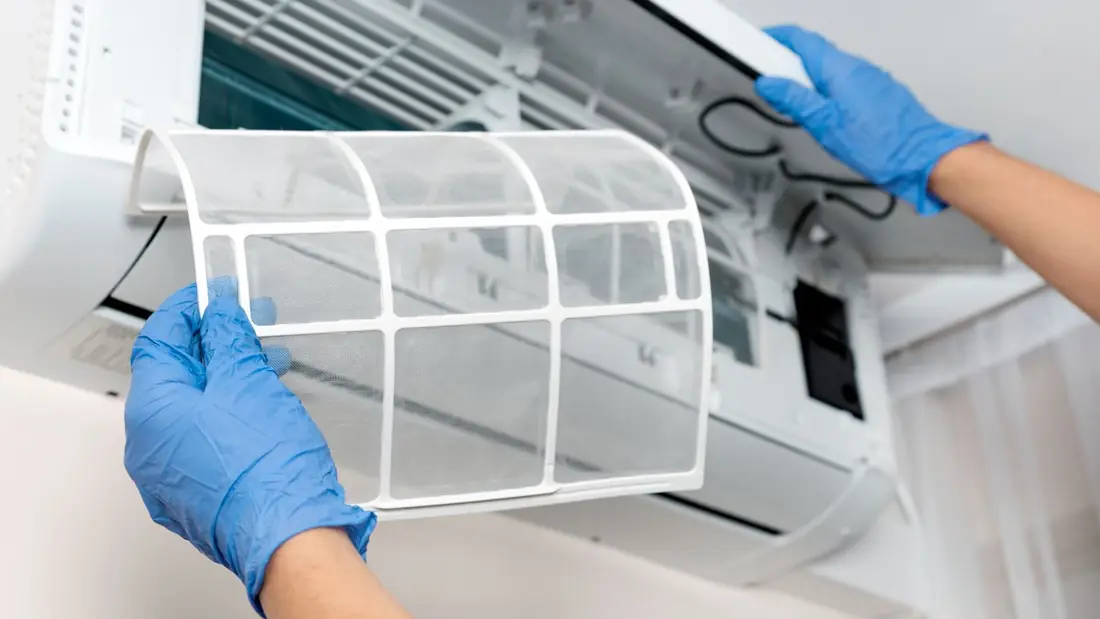
The crew maps the water before touching anything. Pinless and pin moisture meters read the drywall, the baseboard and the framing around the closet, and a thermal imaging camera shows where cooler wet insulation sits above the ceiling. Attic insulation soaked by condensate often has to come out, because it stays wet for a long time.
For a ceiling, small holes or a cut-out section let air reach the wet cavity. Air movers and an LGR dehumidifier then run until the readings reach the dry reference, in line with ANSI/IICRC S500. A closet floor and wall base get the same treatment, with the carpet pad pulled if it is soaked.
General drying principles are on the water mitigation page. If wet drywall and insulation have to come out, that is described under water damage cleanup.
Rebuilding after the AC leak is fixed
When the framing and the cavity read dry, the rebuild begins. A stained but dry ceiling may only need stain-blocking primer and paint. Sagging, soft or cracked drywall is cut out and replaced, then taped, textured and painted to match. Insulation in the attic is replaced where it was wet.
The sequence and the choices are explained on the water damage repair page. One honest limit: painting over a stain before the ceiling is dry only hides it. If the stain returns, the moisture never left.
If dark spots or a persistent musty smell show up after the leak, see mold remediation, because growth is its own job with its own standard.
What affects the cost of AC leak repair
- How long the leak ran, since weeks of dripping soak deeper than one overflow.
- Where the unit sits, because attic work and ceiling access take more labor.
- How much drywall and insulation must be replaced.
- Days of drying equipment and how many rooms are involved.
- Paint matching, texture and the finish level you want.
The HVAC repair is billed separately by that trade. On the restoration side, price and scope come in plain words before work starts. To get a number for your ceiling, call (818) 337-2642 and say where the stain is.
Stain under the air handler right now?
Switch the AC off and call dispatch. Same-day response when available, day or night.
Insurance and AC water damage
A sudden overflow or a pan that suddenly cracks is more likely to be a covered event than a leak that dripped for months. Gradual leaks, rust you ignored and skipped maintenance often fall outside a homeowners policy. Many policies also treat the repair of the air conditioner itself separately from the water damage it caused.
So the wording of your policy decides it. Read it, then ask your insurer how it treats a condensate leak, and keep the pan, line and photos until the adjuster has looked. Renters should tell the landlord in writing and check their own contents coverage.
Mistakes and prevention for AC leaks
- Running the AC while a stain grows, which adds water every cycle.
- Pouring bleach or random cleaners into the line without asking the HVAC technician.
- Painting the ceiling before it is dry.
- Treating a ceiling stain as a roof leak and calling a roofer first.
- Skipping the yearly check of the drain line and float switch.
Prevention is a maintenance habit. Have the line flushed before the first hot weeks, look at the pan every season, and test the float switch if the unit has one. A secondary pan and a leak sensor under an attic unit give the earliest warning.
How hot a Valley summer runs
The NOAA normals for 1991 to 2020 at the Van Nuys Airport station, the nearest Valley station we could verify, put the average daily high at 91.2 degrees Fahrenheit in July and 93.1 in August. That is when an air conditioner works longest, and a half-blocked condensate line has the most water to carry.
The same normals show the average high at 68.2 in January and 67.4 in December. In those months the system rests, so a line that clogged in autumn may sit unnoticed until the first spring heat. For you, that means checking the line before the heat arrives, not after the stain.
Source: NOAA National Centers for Environmental Information, 1991 to 2020 monthly climate normals, Van Nuys Airport station (USW00023130).
Dispatch for AC leaks around West Hills
Dispatch runs 24/7 from West Hills and covers Woodland Hills and Chatsworth as well. Say where the unit sits, which room is stained and whether the system is off, and the crew will plan the drying around the answer.
AC leak questions in West Hills
Is emergency AC leak repair available in West Hills, CA?
Yes. Dispatch answers 24/7, and licensed and insured restoration professionals respond the same day when available. The crew handles the wet ceiling, insulation and closet. An HVAC technician fixes the drain line or pan. Switch the system off first, because a running AC keeps adding water to the damage.
Why is my ceiling stained below the air handler when it has not rained?
Condensation is the likely source. The cold coil sheds water into a pan and a drain line, and when either fails the water goes into the ceiling or closet. A stain that darkens on hot afternoons and fades overnight fits this pattern. A roofer is the wrong first call here.
Can I keep running the AC if the leak is small?
It is better to switch it off. Every cooling cycle adds water to the pan, and a clogged line cannot carry it away. A small stain today can become a soaked ceiling in a weekend. Use fans and open windows until an HVAC technician clears the line.
Does the restoration crew fix the air conditioner?
No. The HVAC trade repairs the line, pan or float switch, and the restoration crew dries and rebuilds the ceiling, closet and walls. Scheduling the HVAC repair first keeps the area from getting wet again. Each trade bills for its own work.
How long does a ceiling take to dry after an AC leak?
The answer depends on how long the leak ran and how much insulation got wet. Many jobs take several days of air movers and a dehumidifier, checked daily with a moisture meter. The crew stops when readings match the dry reference, and that is the honest answer for your ceiling.
What about mold after an AC leak?
Mold needs moisture and time, so a long-running leak raises the question. Testing and removal follow ANSI/IICRC S520, and health questions belong to a physician. See the mold remediation page. Drying the structure quickly and fixing the source are the first steps.