
Roof leak water damage is the harm done inside a building by rain that got past the roof: wet attic insulation, stained and sagging ceiling drywall, soaked wall cavities and damp floors below. If water is dripping now, call the 24/7 line at (818) 337-2642. While you wait, move people and valuables out from under the wet spot, set a bucket under the drip, and leave the lights and fan on that ceiling switched off.
A roofer closes the opening in the roof. The restoration crew removes the water that already came in and dries the structure so it can be rebuilt.
Water coming through the ceiling right now
A dripping or bulging ceiling is a race against weight. Insulation soaks up water like a sponge and presses it against the drywall, and a ceiling carrying that load can drop without warning. Dispatch is open at night and on weekends, and same-day response is offered when crews are available. The first few minutes are yours, so use them on this list.
- Stay out from under any sagging, bulging or brown-stained patch of ceiling. Water pooled above it can bring the drywall down in one piece.
- Move furniture, rugs, electronics and books out of the drip zone. Cover what is too heavy to move with plastic sheeting.
- Put a bucket or a tub under each drip, with a towel in the bottom to cut the splash.
- Photograph and video the stain, the drip and the wet floor before you clean up anything. Your insurer will ask for them.
- Call a roofer about the opening in the roof, and call us about the water that is already inside.
Why a roof that was fine all summer leaks in the first heavy rain
A Southern California roof goes months without being tested. Sun bakes the sealants, shingles curl at the edges, dust and leaves pack into valleys and drains, and tiles shift a little with every heat cycle. Then the first real storm of the season finds every weak point in a single night.
The roof type changes where that weakness usually sits. On a tile roof, the tiles shed most of the water, but the sheet underneath them is the real waterproofing, and it fails at cracked or slipped tiles. A composition shingle roof tends to leak at lifted tabs, worn granules and exposed nail heads. A flat or low-slope roof holds water, so ponding, split seams and a clogged drain are the usual suspects.
Flashing and penetrations cause a large share of leaks on every roof type. Flashing is the thin metal that seals where the roof meets a chimney, a wall, a skylight, a plumbing vent or an exhaust pipe. When the sealant at one of those joints dries out and cracks, water runs in beside the pipe or the curb and shows up as a ceiling stain nowhere near it.
A brown ring, a bubble in the paint or a drip at the light: what you are looking at
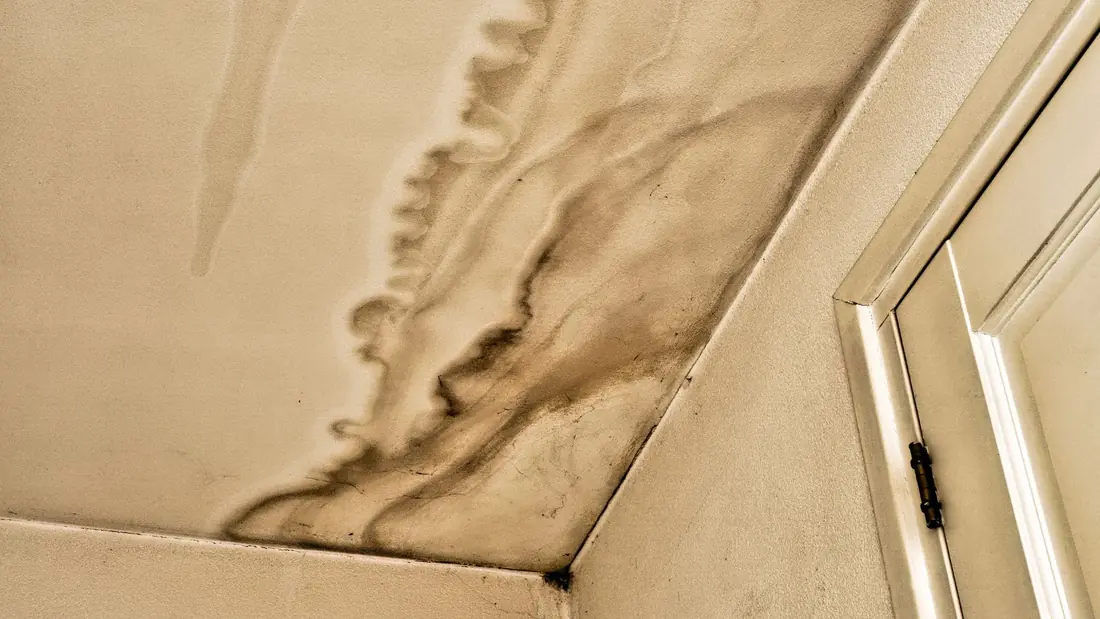
Brown ring with a darker edge
Water has come through more than once, or the spot dried and got wet again. The darker rim marks where the water stopped spreading last time. The insulation above is probably wet, even if the ceiling feels dry.
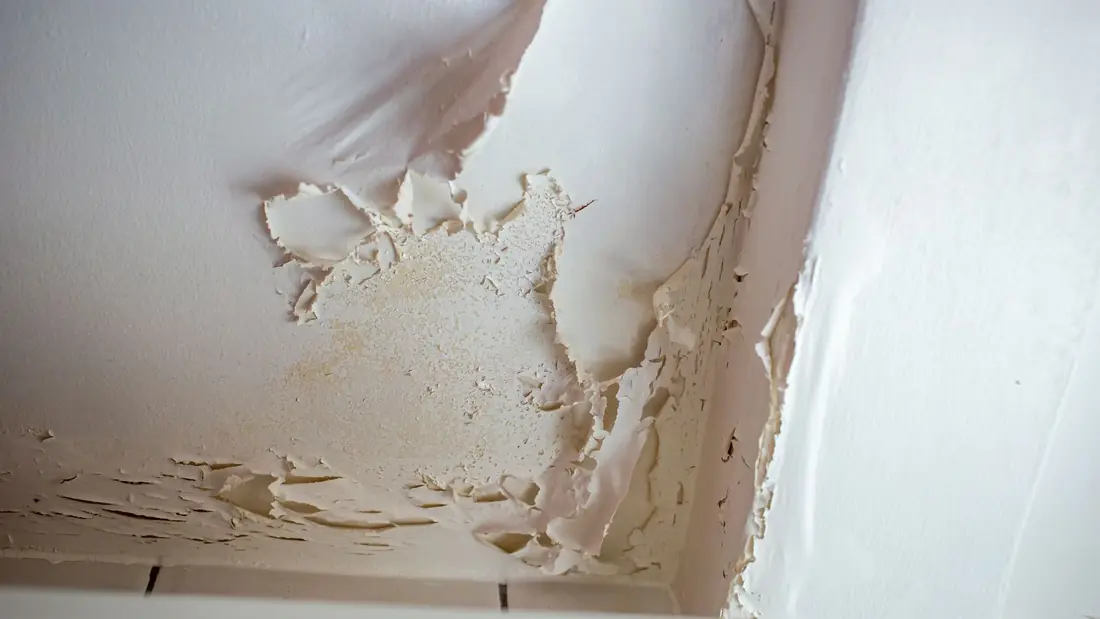
Bubble, sag or soft paint
Water is trapped behind the drywall. The board has lost strength and may fall. Keep people out from under it and call right away.
Drip at a light fixture or ceiling fan
Water has reached the wiring in the ceiling cavity. Switch the fixture off, and treat the circuit as unsafe until it has been checked.
Damp wall or musty smell days later
Water ran down inside the wall and soaked the cavity and baseboard. A stain upstairs and a wet floor downstairs can come from the same hole in the roof.
First-hour safety steps when the roof is leaking
Water above you and electricity in the ceiling are a poor mix. Work through these in order.
Electrical first
If water drips from a light, fan or outlet, switch it off. Turn off the breaker for that room only if the panel is dry, easy to reach, and the floor under you is dry. If you see sparks or smell burning, leave the house and ring 911 or the utility first.
Mind the ceiling
Do not stand or sit under a bulge. If one is already swollen with water, a small hole at its lowest point over a bucket can let it drain in a controlled way. Only do this from the side, well away from any fixture or wiring, and skip it if you are unsure.
Stay off the roof
A wet roof is a fall risk, and a tile roof can crack under a boot. Tarping is roofer work. Leave it to someone who is trained and insured to be up there.
Contain and document
Catch drips, move belongings, and lift rugs off wet floors. Take photos before you move anything. Keep receipts for any temporary protection you buy.
Where the water travels before it shows
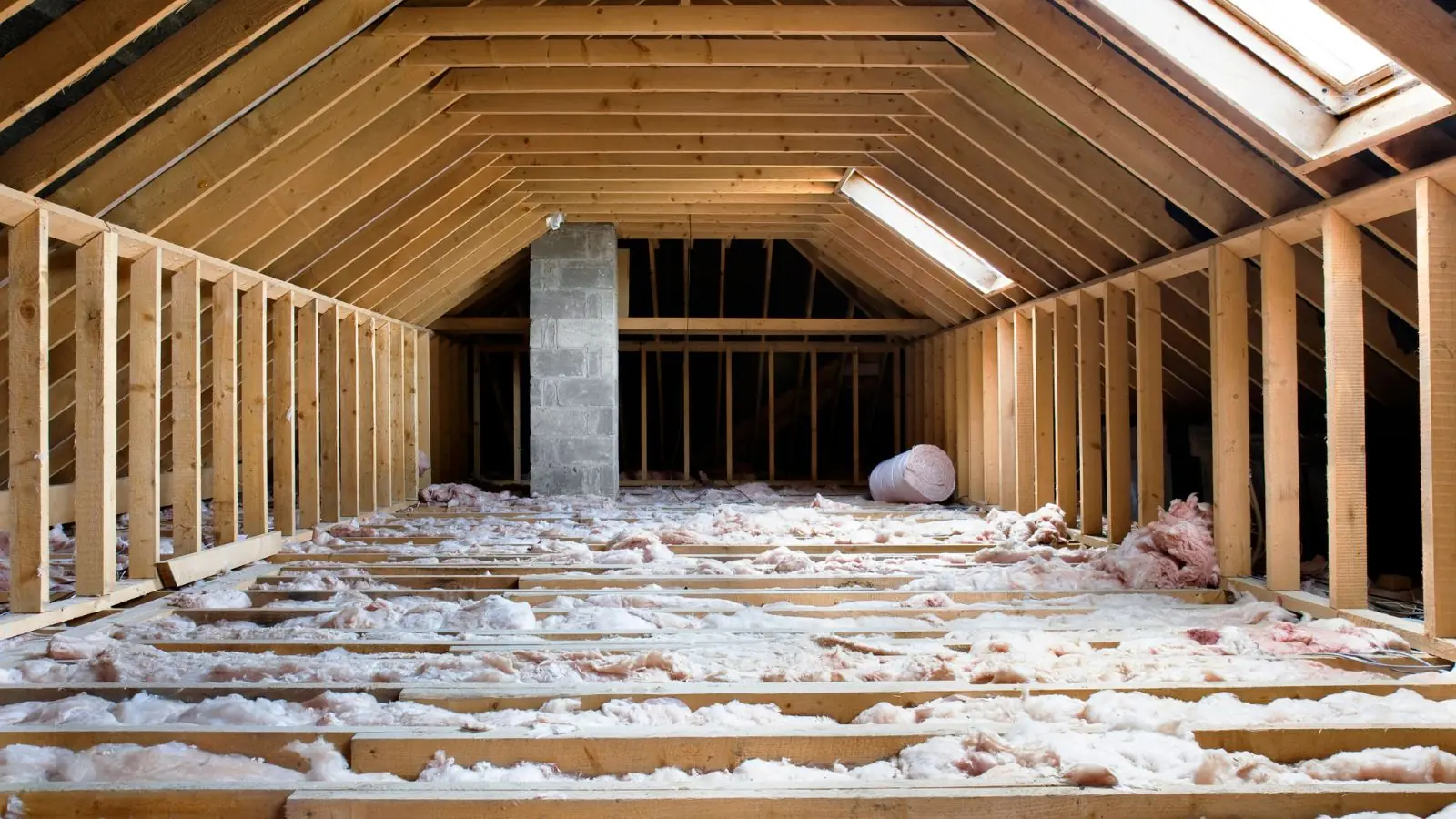
Water rarely drops straight through. It enters at the hole, runs along the underlayment or a rafter, soaks into the insulation, and spreads sideways until it finds a low spot, a seam in the drywall or a light fixture. The stain on your ceiling can sit several feet from the roof opening, which is why patching the stain does not tell you where the leak is.
Inside the attic, wet insulation compresses and loses its insulating value. Blown-in insulation clumps and holds water, so it often has to come out. Water that reaches the top of an interior wall can run down inside the cavity to the baseboard, and from there into carpet pad, flooring and the room below.
That is why the crew starts with readings, not guesses. A moisture meter reads the wet drywall and framing directly. A thermal imaging camera picks up cold, damp zones behind a surface that looks dry. Together they mark how far the water got, so you do not tear out more than you need to or leave a wet pocket behind.
Who fixes what: the roofer and the restoration crew
Be clear about the split, because it saves time. A roofer finds and closes the way water entered. In California, roofing is its own licensed trade, and the Contractors State License Board (CSLB) lists a C-39 Roofing Contractor classification. We do not repair roofs. We handle what the roof let in.
| Job | Who does it | Notes |
|---|---|---|
| Find and close the roof opening | Roofer (CSLB C-39 classification) | Includes flashing, tile, shingle or flat-roof repair |
| Temporary tarp over the opening | Roofer | Do not climb a wet roof to do it yourself |
| Remove wet insulation and soft drywall, dry the structure | Restoration crew, see water mitigation | Moisture mapping, air movers, LGR dehumidifiers |
| Pull water out of wet carpet and flooring | Restoration crew, see emergency water removal | Extraction unit, then drying |
| Rebuild the ceiling, repaint, replace insulation | Rebuild crew, see water damage repair | Starts only after readings show dry |
| Check for mold growth after a damp week | See mold remediation | Needs moisture, so drying comes first |
Ask any roofer for a license number and check it on the CSLB site before you sign. CSLB says a license is needed when the total cost of a project, labor and materials, reaches $1,000, and that the limit applies from January 1, 2025. A permit or extra workers can bring a smaller job under the licensing rule too.
How the crew dries a home after a roof leak
Map the water
Moisture readings and a thermal imaging camera trace the wet insulation, ceiling, wall cavities and floor, from the stain outward.
Remove what cannot dry
Sagging drywall and soaked insulation come out. Containment barriers and a HEPA air scrubber keep dust from spreading to the rest of the house.
Extract and dry
An extraction unit lifts water from carpet and pad. Air movers and an LGR dehumidifier then pull moisture from framing, subfloor and open wall cavities.
Check the attic
Wet framing and decking above the ceiling need drying too, and the readings there show whether the leak has really stopped.
Measure until dry
The crew takes daily readings and stops only when they match dry reference points. The work follows the published ANSI/IICRC S500 standard for water damage restoration.
What shapes the cost of roof leak water damage work
No honest number exists until someone reads the moisture. These are the factors that move the figure:
- How much of the ceiling and how many rooms the water reached, including rooms below.
- How much attic insulation is wet and what kind it is.
- Ceiling and wall materials, since flat drywall, textured finishes and plaster behave differently.
- How many days of drying the structure needs, and how many air movers and dehumidifiers go in.
- The rebuild scope after drying, covered on the water damage repair page.
Want your real number? Call (818) 337-2642 and the crew lays out scope and price ahead of the work.
Roof leaks and insurance: sudden versus gradual
Under the state insurance department's guidance, a sudden and accidental loss is generally covered, and slow seepage, wear and tear and neglect are generally excluded. A storm that rips open a sound roof is a different story from a worn roof that has been seeping for years. Some policies also address rain that wind pushes under roofing, so ask about that wording.
Read your policy, then put your loss to your insurer in plain terms. Photograph the damage first, keep receipts for temporary protection, and, as the CDI advises, wait on permanent repairs until an adjuster has looked at the damage. Wet ceiling material should be photographed before it comes out, so the adjuster can see what was lost.
Mistakes to avoid after a roof leak
- Painting over the stain. The paint hides the ring and seals moisture in. The leak and the wet insulation are still there.
- Waiting for the ceiling to look dry. Insulation and framing stay wet long after the surface feels fine.
- Climbing onto a wet roof or a tile roof to tarp it yourself.
- Running a ceiling fan or heater under a wet ceiling. Dry air from the wrong direction does not reach the wet cavity above.
- Calling the stain fixed when the rain stops. The roof opening is still open for the next storm.
Dry months, wet months, and who licenses roofers
Monthly normals from NOAA (1991 to 2020) for the Van Nuys Airport station show July at 0.00 inches of rain and August at 0.01. September averages 0.12, October 0.48, and February 3.79. A roof can go four months without seeing a drop, then face its biggest tests within a few weeks of each other. Inspect it before October.
The CSLB classification list names C-39 Roofing Contractor. Its description covers installing and repairing products that seal, waterproof and weatherproof a structure, with materials such as shingles and roof tile. Roof repair is a licensed trade of its own, separate from water damage restoration.
CSLB's licensing rules put the threshold at $1,000 in labor and materials, raised from $500 effective January 1, 2025. Ask a roofer for a license number before you pay anything, and look it up.
Source: NOAA NCEI 1991 to 2020 monthly normals (Van Nuys Airport), Contractors State License Board classification list and licensing requirements pages
Ceiling dripping while it rains?
Phone us whenever it starts, and tell dispatch where the stain is. The crew handles the inside while your roofer deals with the outside.
Crews for West Hills and the streets beside it
Dispatch works out of Vanowen Street and covers homes in Canoga Park, Chatsworth and Winnetka as well. If the water came from a whole storm and not only the roof, the storm water damage page covers windows, gutters and runoff too.
Questions about roof leak water damage
Is emergency roof leak cleanup available in West Hills, CA?
Yes, at any hour, including nights and weekends. Dispatch takes calls around the clock at (818) 337-2642, and crews go out the same day when they can. We deal with the water inside: soaked insulation, ceiling, walls and floors. A roofer has to close the opening in the roof, so line one up too.
Who should I call first, a roofer or a restoration company?
Call both, because they do different work. A roofer stops more rain from coming in. The restoration crew removes the water that already got in and dries the structure. Waiting on one does not make the other unnecessary. If water is actively dripping, the inside call usually cannot wait.
My ceiling stopped dripping when the rain stopped. Do I still need anyone?
Probably yes. Insulation above a ceiling holds water for days, and the framing and drywall stay damp long after the drip ends. Damp materials left wet for a day or two can start to support mold, so crews try to start drying early. A moisture meter reading will tell you whether it is dry.
Should I poke a hole in a bulging ceiling?
Only when you can do it safely. A small hole at the lowest point of the bulge, over a bucket, lets water drain in a controlled way, which beats a sudden collapse. Stand to the side and keep clear of fixtures and wiring. If the bulge is large, sits near wiring, or you feel unsure, stay out of the room and call.
Does homeowners insurance cover a roof leak?
It depends on the cause. The state insurance department separates sudden, accidental damage (generally covered) from seepage, wear and tear and neglect (generally excluded). Check your policy, ask your insurer, and photograph everything before cleanup.
Why does my roof only leak in the first big storm of the year?
After months of dry weather, sealants crack, shingles lift and drains fill with debris. The first heavy rain tests every weak spot at once. Once the ceiling is dry and the rainy season is over, have a roofer inspect flashing, penetrations and the roof surface before the next storm arrives.