
Appliance leak water damage is moisture that escapes from a washing machine, dishwasher, refrigerator or similar fixed appliance and soaks the floor, cabinets and walls around it. In West Hills it usually starts at a rubber hose or a door seal, not at the machine itself. If the water is still running, shut the valve first, then call (818) 337-2642 and the crew will tell you what to do next.
Where appliance water actually comes from
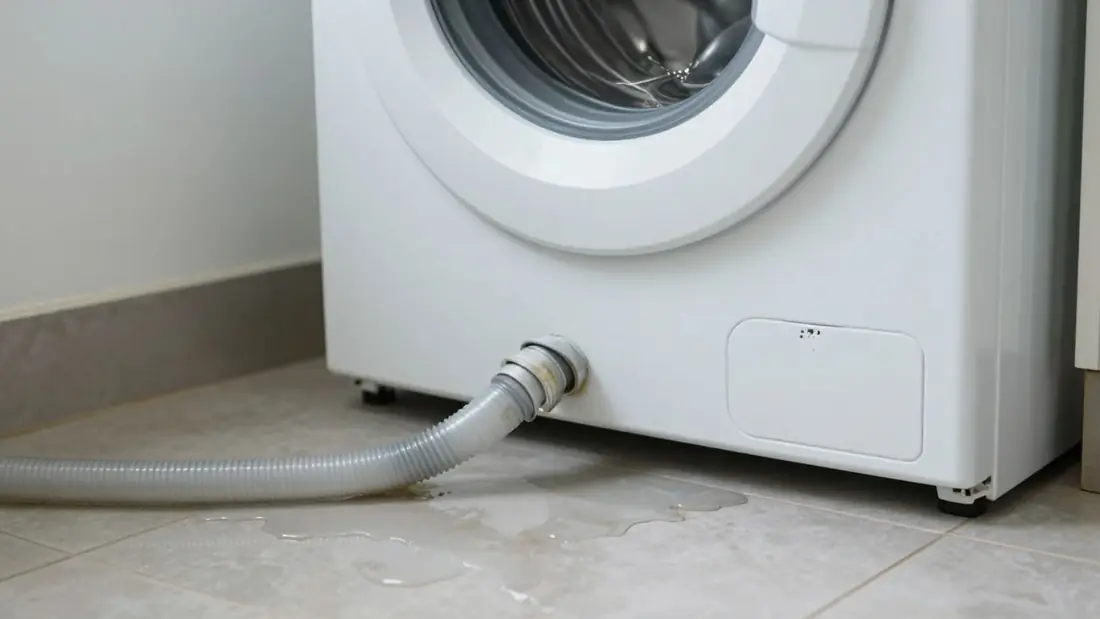
Most washer floods begin at the two hoses behind the machine. The supply hoses stay under household water pressure all day, even when the machine is idle, so a split sleeve or a loose coupling can release water for hours. The drain hose is different. It only carries water during the pump-out, but it can pop off the standpipe and send a full tub across the laundry room.
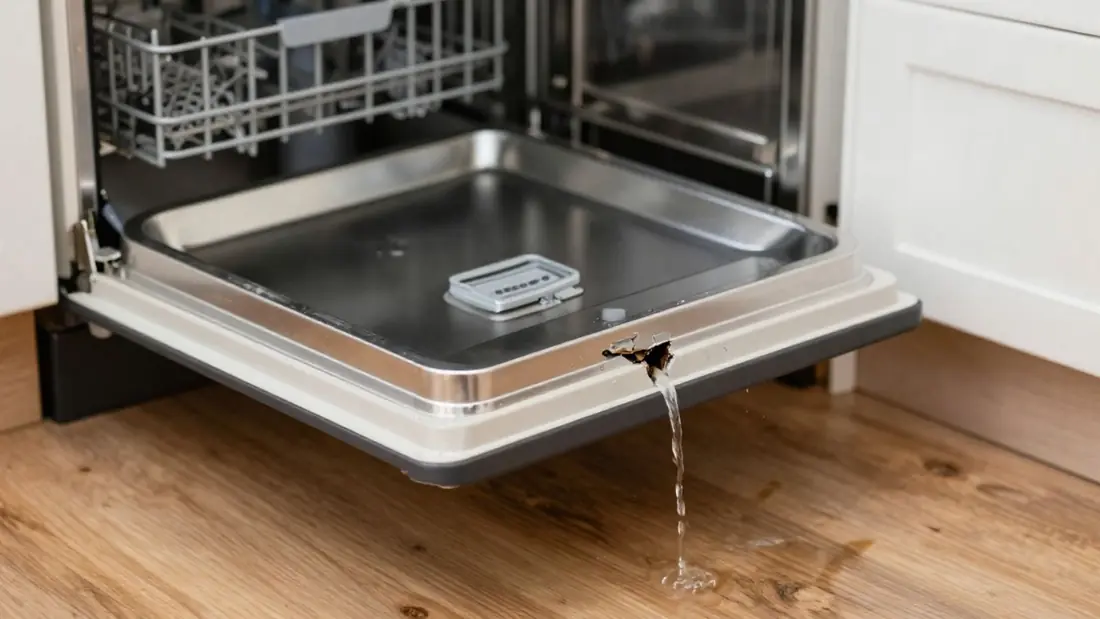
Dishwashers fail in other places: the inlet supply line under the sink, the door gasket, a cracked hose clamp or the pump housing. Refrigerators leak from the thin plastic or braided line feeding the ice maker and water dispenser, and that line often runs through a wall or cabinet where nobody looks. A small drip there can run for weeks.
A few appliances do not belong here. A failing water heater, a kitchen sink supply line and a burst pipe in a wall are different problems. Large volumes of water from any of them are handled through emergency water removal, so this page stays with the appliances.
Sudden burst or slow seepage: what you will see
A sudden failure is obvious. Water spreads across the laundry room in a sheet, runs under baseboards and shows up in the next room. A slow seep is quiet. You may only notice a floor that feels springy near the machine, vinyl planks lifting at the seams, a musty smell when you open the cabinet, or a baseboard that has swollen and split along the bottom edge.
| Sudden burst | Slow seepage | |
|---|---|---|
| Typical source | Supply hose split, drain hose off the standpipe | Door gasket, ice maker line, loose clamp |
| First sign | Standing water, wet walls the same hour | Soft floor, swollen trim, stain, odor |
| Water category | Usually clean supply water at first | Often aged, with deposits on the material |
| What the crew finds | Wide but shallow wet zone | Narrow but deep, often under cabinets or flooring |
| Usual outcome | Dry in place when caught early | More material removed, sometimes to the subfloor |
Category matters because it sets what can stay. Clean supply water that is dried quickly is the best case. A dishwasher or washer drain line is different, since that water has already touched soap, food or lint and is treated as gray water under ANSI/IICRC S500. Gray water that sits only gets worse, so the clock runs faster than most homeowners expect.
Upstairs laundry closets, townhomes and the unit below
A washer in an upstairs closet or a stacked condo laundry changes the stakes. Water does not stay in the room. It goes down through the floor assembly, along the joists, into the ceiling below and down wall cavities, and the first place it shows is often a ceiling stain in another room or another unit. The wet area you can see is rarely the whole wet area.
In a condo or attached townhome, that second unit raises practical questions. Turn off the water, tell the building manager or HOA contact quickly, and take photos of both your side and the neighbor's side if they allow it. Association rules, shared walls and who owns which piping vary by building, so read your governing documents.
Crews can document and dry both sides when both owners agree. The Woodland Hills page covers more on shared walls and condo layouts.
First-hour safety steps for an appliance leak
Appliance leaks sit near outlets and cords, so the order below matters more than speed.
Stop the water
Close the small valve behind or under the appliance. If it will not turn, close the main shutoff for the house.
Mind the electricity
Unplug the appliance only if the outlet and floor are dry and you are not standing in water. If not, switch off that circuit at a dry panel. Call 911 for sparking or burning smells.
Pull it clear
Slide the machine out only if you can do it without kneeling in water. Check behind it for the real source and a still-open valve.
Photograph and move
Take photos before you wipe up. Lift rugs, boxes and cabinet contents off the wet floor and keep children and pets out.
How the water is found and dried
The crew starts by tracing the route, not by pointing fans at the visible wet spot. A pin and pinless moisture meter checks the floor, baseboards and wall bases around the appliance. A thermal imaging camera shows cool, wet areas behind cabinet faces and under flooring. Readings are logged and become the baseline for drying.
Standing water goes out with a wet vacuum or an extraction unit. Then air movers and LGR dehumidifiers go in, and a small hole or removed toe-kick can let air reach the wet cavity under a cabinet. Drying commonly takes several days and the equipment is checked daily until the readings match dry reference materials, which is the method described in ANSI/IICRC S500.
Some of the work is pure drying, and the general approach is on the water mitigation page. When a laundry room has soaked into drywall, trim or sheet flooring, the rest is cleanup of affected materials, and water damage cleanup covers that stage.
What dries in place and what comes out
| Material | Usually dried in place | Usually removed |
|---|---|---|
| Concrete slab | Almost always, with dehumidification | Only the covering on top |
| Tile | Tile stays, the cavity below can be dried | Loose or hollow-sounding tiles |
| Vinyl plank or laminate | Caught within a day, floating plank lifted and dried | Swollen or delaminated pieces |
| Cabinet base | Solid wood bases with air flow | Particleboard that swelled |
| Drywall and baseboard | Lower wall, dry, no staining | Wet insulation, soft or stained drywall |
| Carpet and pad | Clean-water carpet lifted fast | Pad after gray-water contact |
Particleboard cabinet bottoms and laminate cores are the two items homeowners most often hope to save. Once they swell, they do not shrink back, and the repair is replacement. Solid wood, tile, concrete and most framing are the materials that tolerate a soaking when the drying is done on time.
Repair and options after drying
Once the readings come down, the rebuild list is short for a clean washer burst and longer for months of seepage. It may include new baseboard, a drywall patch, replacement flooring or a replaced cabinet base. The water damage repair page explains how that rebuild is sequenced, and the crew scopes it before work starts.
Two honest trade-offs. Drying more material in place costs less demolition but needs more equipment days. Removing more material costs more up front and gives cleaner access. Ask the crew which route they recommend and why, with the readings to back it up.
What affects the cost of an appliance leak
- Water category, since gray water means more materials come out.
- The size of the wet area and how many rooms or units it reached.
- Flooring and cabinet materials, and whether they can be dried or must be replaced.
- Days of drying equipment, which depends on how deep the water got.
- The rebuild scope after drying, from a baseboard to a cabinet run.
The crew explains scope and price before work starts. For a real number on your house, call (818) 337-2642 and tell dispatch which appliance failed.
Appliance leak in the house right now?
Tell dispatch what failed and where the water went. Same-day response when available, any hour.
Does insurance cover an appliance leak?
Damage from a hose that fails suddenly is often covered by a homeowners policy. Seepage that went on for months, or neglected maintenance, often is not. A split hose that floods the kitchen in one afternoon is a different claim from a seep that rotted a subfloor over a year. Renters and condo owners may have different coverage for the walls and the contents.
Read your policy, then ask your insurer how it treats this kind of loss. The California Department of Insurance guide tells owners to dry wet areas after sudden damage. Its guide also cautions that older leaks can hide mold, so talk to the adjuster before cleaning up on your own. Keep the failed hose and your photos for the claim.
Mistakes that make appliance leaks worse
- Leaving rubber supply hoses in place for a decade. Many owners swap to braided stainless hoses, which are still a wear item and worth checking.
- Wiping the floor dry and ignoring the cabinet base, the wall behind the machine and the room below.
- Running a heater or fan only at the visible wet spot, which pushes moisture into hidden areas.
- Installing an upstairs washer with no drain pan, no floor drain and a shutoff valve you cannot reach.
- Waiting to see if a stain on the ceiling below grows.
Small habits prevent most of this. Turn the washer supply valves off when you leave for a trip. Pull the machine out once a year to look at hoses and the drain pan. A water-leak sensor or an automatic shutoff valve also gives you a warning before the floor does.
West Hills housing in numbers
The 91307 ZIP area has 9,168 housing units and an average of 2.9 people per household, in the Census Bureau's ACS profile of that ZIP code area, 2024 five-year data. More people per home means more laundry loads, and more machine hours means more wear on every hose.
Those figures do not separate condos from houses. On permits, the City of Los Angeles building department's express list names drywall replacement for single family dwellings and duplexes. A condo or townhome unit is not named there, so ask the building department what your rebuild needs.
Source: Census Bureau ACS 2024 five-year profile of ZCTA 91307 (Census Reporter mirror), and City of Los Angeles Department of Building and Safety Express Permits bulletin.
Dispatch for appliance leaks in West Hills and nearby
Dispatch runs around the clock from West Hills and covers Canoga Park and the neighborhoods around it. If the leak reaches a neighbor, the crew can document each side. Tell the dispatcher which floor the appliance is on and who lives below.
Appliance leak questions in West Hills
Is emergency appliance leak cleanup available in West Hills, CA?
Yes. The line runs 24/7 and dispatches licensed and insured restoration professionals, with same-day response when available. When you call, say which appliance failed, whether the valve is shut, and whether a second unit or floor is wet. Stop the water first and lift valuables off the floor.
How do I know if the washer leak reached the floor below?
Look for a ceiling stain, a bubbling paint ring, a drip from a light fixture or a musty smell in the room under the laundry. If you cannot see any, a moisture meter and thermal camera can check the ceiling and wall cavities without opening them. Do not poke a bulging ceiling, because trapped water can come down at once.
Can a dishwasher leak damage the subfloor?
Yes. Water from the door seal or inlet line runs under the cabinet toe-kick and soaks the subfloor where you cannot see it. Swollen cabinet edges and a floor that flexes by the dishwasher are warning signs. The crew checks the cabinet base and the floor below with meters before deciding to open anything.
Will my refrigerator ice maker line leak again after it dries?
Drying does not repair the line. A plumber or appliance technician must replace a cracked or loose line, and the crew dries and rebuilds what got wet. Shutting the small valve behind the refrigerator while the line is repaired keeps the water off the floor.
Do I need to move out while the floor dries?
Often not. Air movers and dehumidifiers are loud and run day and night, so some people sleep elsewhere. If the water reached a bathroom or the only kitchen, the crew explains what is usable. Clean supply water is simpler than gray water, and the crew will say which category yours is.
Who pays when my washer floods the unit below?
It depends on your policy, your governing documents and what caused the failure. Many policies include liability coverage for damage to others, but check yours and ask your insurer. Document both sides, keep the failed part and talk to your building manager before anyone starts repairs.