
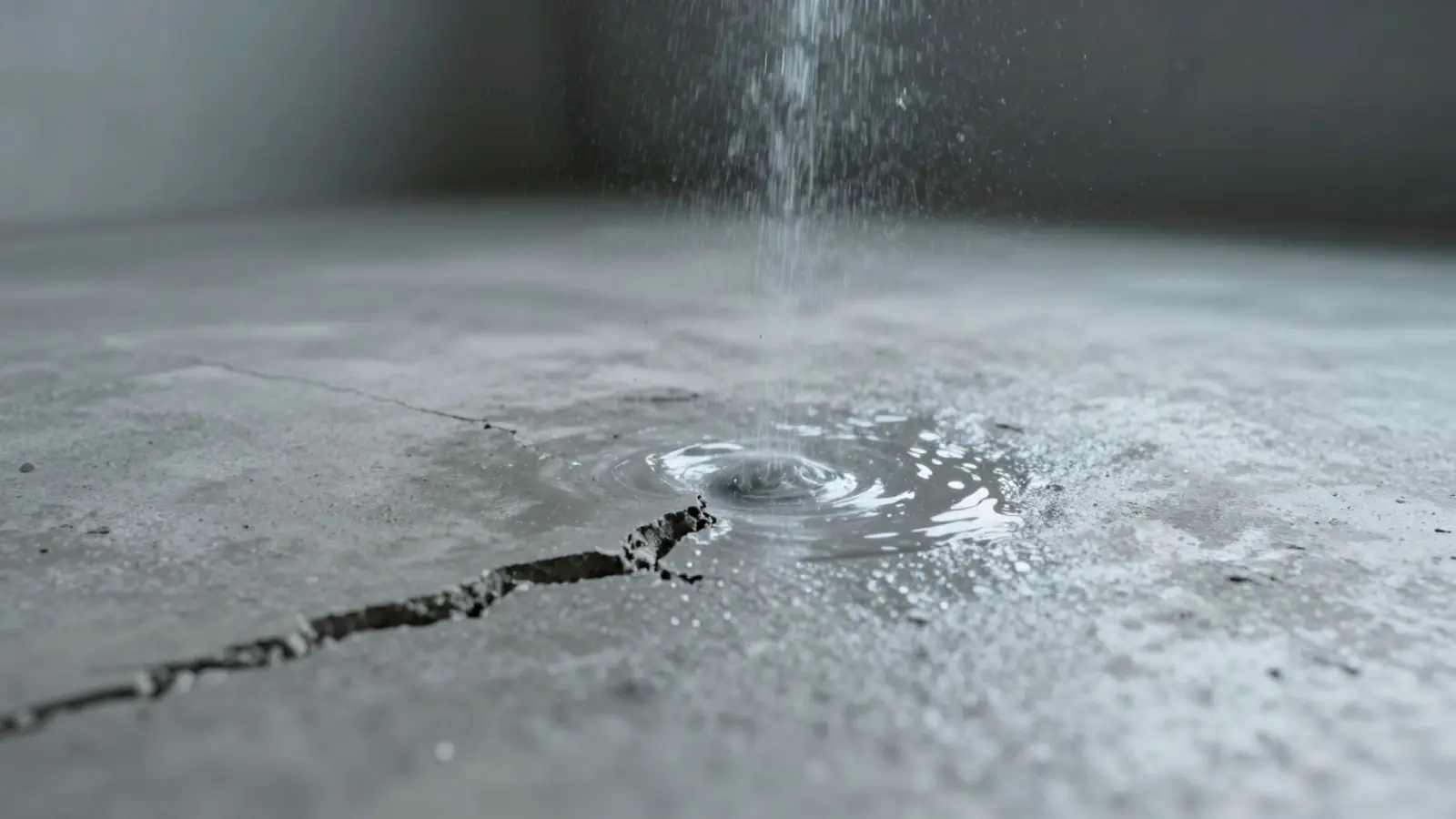
A slab leak is a leak in a pressurized water line under or inside a concrete slab foundation. Slab leak water damage follows when that water rises into flooring, baseboards and wall bottoms, and it keeps going. Dispatch for slab leak cleanup in West Hills, CA runs 24/7. Meanwhile, close the main water valve, lift valuables off the floor, cut power to wet rooms only if the panel is dry, and keep pets and people off wet flooring.
Be clear on one point before anything else. Many Southern California houses sit on a concrete slab, and many others sit on a raised wood floor over a crawl space. Only a slab home has this exact problem, because water under a raised floor drops away instead of rising through it. If your house has a crawl space, water mitigation is the closer match.
How a slab leak happens
Some slab homes have copper supply lines laid in the gravel bed under the concrete or cast inside it. Over decades those lines can corrode from the outside, rub against rock as hot water makes them expand and contract, or get squeezed when the soil moves. A pinhole becomes a steady spray, and the water has to go somewhere.
Concrete is porous and cracked in places, and it has joints at walls and doorways. Water finds those paths and rises into whatever lies on top of the slab. A hot-water line often shows itself first, because the heat reaches the floor surface.
Finding the leak is not the restoration crew's job. A licensed plumber or a leak-detection specialist locates the line with acoustic listening gear, pressure testing or thermal imaging. The crew's job starts with the water that is already in your house.
Warm floor, rising bill, running sound: is it a slab leak?
No single sign proves it, but several together make a strong case. Treat any of these as a reason to shut the water off at the main and call a plumber.
A warm spot on the floor
Bare feet find it before eyes do. A patch of tile or wood that stays warm with the heater idle can mean a hot-water line is leaking below.
A jump on the water bill
A bill that climbs with no change in habits points to water leaving the system somewhere you cannot see. Compare the last few bills.
Running water with every tap closed
A hiss, trickle or hum from the floor or a wall when the house is quiet is worth tracing at once, especially at night.
Cracked tile or lifting floor
Grout lines that open, tiles that tent and laminate planks that peak or cup suggest moisture is pushing up from underneath.
Damp carpet over the slab
A cold, damp patch that returns after you dry it, with no spill or roof leak to explain it, deserves a plumber's attention.
Low water pressure
When a line is losing water below the house, taps upstairs of the leak can run weak. Pressure that drops for no clear reason is a clue.
You can also run a quick test. Close every tap and appliance, then watch the water meter. If the dial or the small low-flow indicator keeps moving, water is leaving somewhere. If your slab floor is already wet, skip the test and go straight to the main valve.
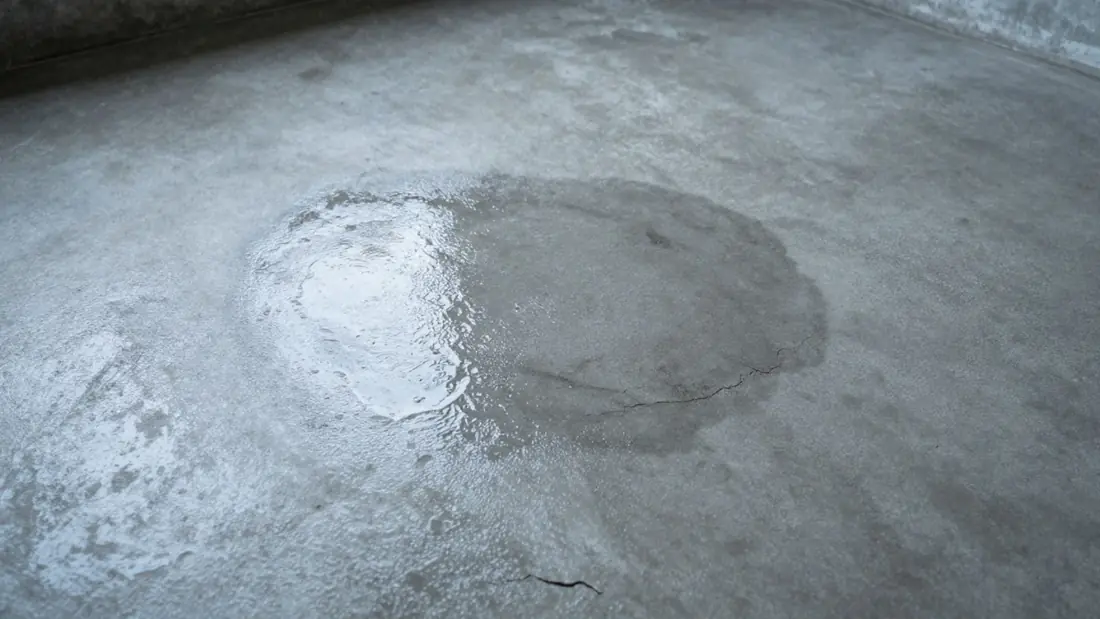
First-hour safety steps when water is coming up through the floor
Water near electrical circuits and slick tile are the real dangers in the first hour. Do these in order.
Close the main valve
Turn the main shutoff at the house to stop supply to the broken line. If the valve is stuck, call a plumber or the restoration line.
Mind the electricity
Flip the breaker only when the panel stands in a dry spot you can walk to. If water reached an outlet or the panel itself, phone 911 or the electric utility before anything else.
Gas smell means leave
If you smell gas, leave the house, then call the gas utility or 911 before you call anyone else.
Protect what you can
Lift furniture legs onto blocks, move rugs and boxes, and pull books and shoes off the floor. Keep children and pets off wet tile.
Night or weekend discovery
A warm floor at 2 a.m. or a wet hallway on a Sunday still gets answered. Call (818) 337-2642, shut the main valve and name the rooms that feel wet. Same-day response is offered when available, including after hours.
Who does what: the plumber and the restoration crew
Two trades are involved, and they work in sequence. Ask any plumber you hire for a contractor license, and check it on the Contractors State License Board website before you sign.
Stop the water
The main valve closes first. The plumber or leak-detection specialist then finds the line.
Map the wet area
The crew uses moisture meters and a thermal imaging camera to mark wet floor, wall and cabinet areas.
Remove what cannot dry
Carpet pad, soaked baseboard, saturated drywall and swollen cabinet bases come out.
Dry the slab and structure
Air movers, drying mats and dehumidifiers run until readings reach the goal.
Rebuild
Flooring, wall board, trim and paint go back once the plumber has repaired the line.
Drying can start before the pipe is fixed only if the supply is off. Water that keeps arriving will outrun any equipment, so the plumber's timing matters.
Slab leak repair options a plumber will weigh
Which fix suits your house is the plumber's decision, based on where the line sits, how many leaks it has had and what the slab looks like. The restoration crew needs to know the choice, because it changes how much floor is open and for how long.
| Option | What it involves | Trade-off | Effect on the water damage work |
|---|---|---|---|
| Spot repair | Cutting into the slab above the leak and fixing that section of line | Leaves older pipe in place, so another leak can follow | A small opening in the floor, with drying carried out around it |
| Reroute | Abandoning the leaking line and running a new one through the attic or walls | Opens walls or ceilings in other rooms | More drywall removed and rebuilt, but the slab stays intact |
| Repipe | Replacing the supply lines in the house | Largest project of the three | Walls and ceilings open in several rooms, so drying and rebuild are coordinated with the plumber |
If you are choosing between quotes, ask each plumber what will be opened and how the floor will be patched. That answer decides how much of the water damage repair work is yours afterward.
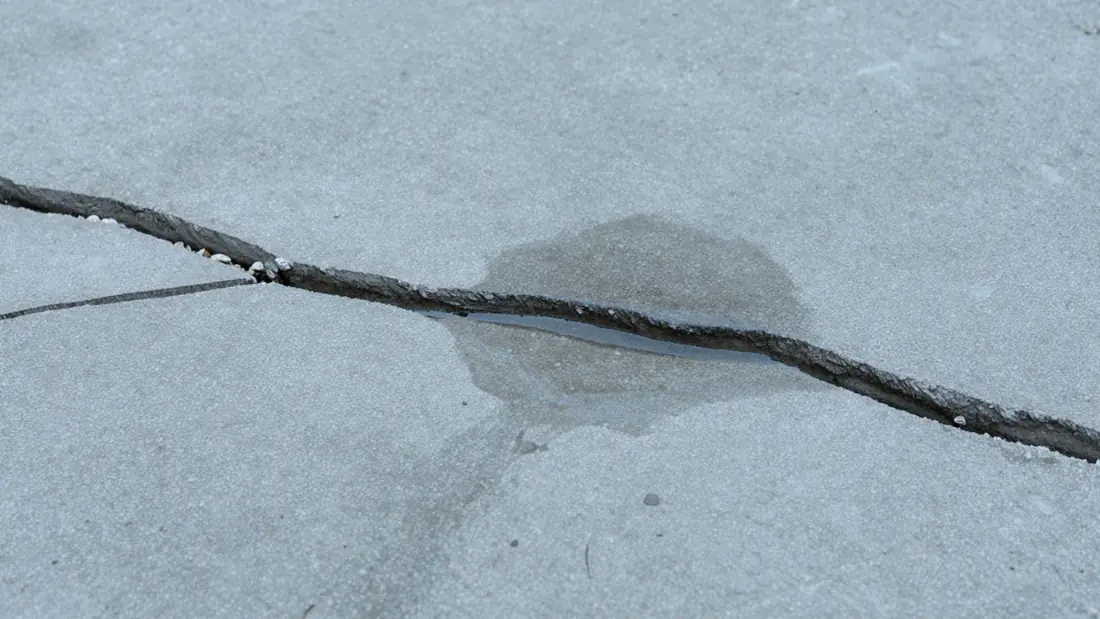
How a wet slab-on-grade floor is dried
Concrete holds water far longer than wood or drywall, so a slab can read wet well after the surface feels dry. The crew starts with a moisture meter on the finished flooring, then uses thermal imaging to find the cool, damp areas under it. Readings on the same material in an unaffected room set the dry reference.
Wet carpet and pad are cut and lifted, and the pad is almost always discarded. Vinyl, laminate and wood planks may be lifted so air can reach the slab and the underside of the plank. Tile can stay if the readings under it come down, and may have to be pulled if water is trapped beneath.
Then the equipment goes in. Air movers push dry air across the exposed slab. LGR dehumidifiers pull the moisture out of the air. Low-profile drying mats can pull water from the slab surface, and in a cabinet bay the crew may remove the toe kick to dry the cavity behind it.
Walls take the same care. Water wicks up the bottom of drywall and into the bottom plate, so the crew drills small relief holes, removes baseboard and checks the stud bays for wet insulation. ANSI/IICRC S500 is the industry standard for this kind of structured drying, and any company can explain how its crew applies it.
Equipment stays until the logged readings reach the goal, not for a fixed number of days. When a new floor is going down, the flooring maker's own moisture limit for concrete may be stricter, so ask what that limit is before the installer arrives.
What drives slab leak cleanup cost
Cost depends on the size and condition of the loss, not on the cause. Five factors set it.
- Affected area: how many rooms and how much of each floor and wall got wet.
- Materials: carpet and pad dry differently than tile, hardwood or a built-in cabinet base.
- Water category: a clean supply line starts as clean water, but time and contact can change that.
- Drying time and equipment: thick concrete means more equipment days and more monitoring visits.
- Rebuild scope: whether flooring, baseboard, drywall and paint are replaced, and whether the plumber's repair reopens any of it.
Want your real number? Call (818) 337-2642, describe the rooms and the flooring, and the crew will explain what the scope looks like before work starts.
Water coming up through the floor?
Call (818) 337-2642 any hour. Tell the dispatcher which rooms are wet and if the main valve is shut, and you will hear the next step.
Slab leaks and your insurance policy
Policies usually separate a sudden, accidental burst from seepage that went on for weeks. A slab leak can sit in between, because it may have run for some time before anyone noticed. Policies also tend to treat the cost of reaching the pipe differently from the damage the water caused.
Check your policy and ask your insurer before permanent work starts. Take photos of the wet floor, keep the plumber's report that shows where the line failed, and keep a record of the moisture readings the crew takes.
Mistakes to avoid and prevention
- Waiting for the next water bill. A steady leak keeps wetting the slab every hour.
- Laying new flooring over damp concrete. Trapped moisture can bring back swelling, odor and mold.
- Drying only the surface. A fan on a carpet can leave the pad, baseboard and wall bottoms wet.
- Painting over a stain at the baseboard before the wall reads dry.
- Assuming the restoration crew will find or fix the pipe. That belongs to a licensed plumber or a leak-detection specialist.
Prevention is mostly attention. Learn where your main valve is and make sure it turns. Read the water meter now and then with everything off, and treat an unexplained jump in a bill as a reason to look. If damp spots linger after the repair, ask the crew to recheck those areas with the meter.
What the Census and city sources say about West Hills homes
The Census Bureau's 2024 five-year American Community Survey counts 26,580 residents in ZIP code 91307. That number does not say how many homes sit on slabs, and we could not verify a median home age, so we do not claim one. Check your own house: a concrete floor in the garage and no crawl space vent usually means a slab.
The City's 1999 community plan describes West Hills as primarily single-family. That points to houses rather than large apartment buildings, which matters because a slab leak in a house usually means one owner choosing between repair options.
West Hills addresses use ZIP codes 91307 and 91304, according to City of Los Angeles Recreation and Parks listings. If your address is filed under either, the same dispatch line covers it, as do neighbors in Woodland Hills and Canoga Park.
Source: U.S. Census Bureau, American Community Survey 2024 5-year (via Census Reporter). City of Los Angeles community plan (1999). City of Los Angeles Recreation and Parks facility listings
A burst pipe above the floor or a failed water heater is a different loss, and emergency water removal handles the standing water from either. Homes in Chatsworth are served from the same line.
Slab leak water damage questions
Is emergency slab leak cleanup available in West Hills, CA?
Yes. Someone answers at 3 a.m. on a Saturday just as at noon on a Tuesday, and same-day response is offered when available. Close the main valve, lift valuables off the floor and call (818) 337-2642. The crew dries the floor, walls and cabinets, while a licensed plumber or leak-detection specialist finds and repairs the line.
Can the restoration crew find and fix the slab leak?
No. Locating and repairing a pressurized line under a slab is plumbing work and belongs to a licensed plumber or leak-detection specialist. The crew's moisture meters and thermal imaging camera show where the water has spread inside your home, which can help the plumber narrow the search. After the repair, the crew dries the structure and rebuilds.
How long does a slab floor take to dry?
It depends on how long the leak ran, how thick the slab is, what flooring sits on it and how much equipment is used. Concrete releases water slowly, so the crew goes by moisture readings and a drying log, not by a promised number of days. Equipment comes out when the readings reach the dry goal.
Will my floor have to be torn up to dry the slab?
Carpet and pad are usually lifted, and loose flooring such as laminate or vinyl planks may be lifted too. Tile can often stay if readings under it fall. Any cutting into the slab to reach the pipe is a plumber's decision, and the plumber should tell you before it starts.
Can a slab leak cause mold?
Moisture left in flooring, baseboard and wall bottoms can support mold if it is not dried. Mold needs moisture, so drying quickly and to readings is the best control. If you see or smell growth, testing comes first, and the mold remediation page explains how containment and removal are handled. Questions about your own health go to a physician.
Should I shut off the water if I only suspect a slab leak?
Yes, if you can do it safely. Closing the main valve costs little and stops a hidden line from adding water to the slab. Then call a plumber to confirm the leak. If you find standing water or damp walls, call (818) 337-2642 as well.