
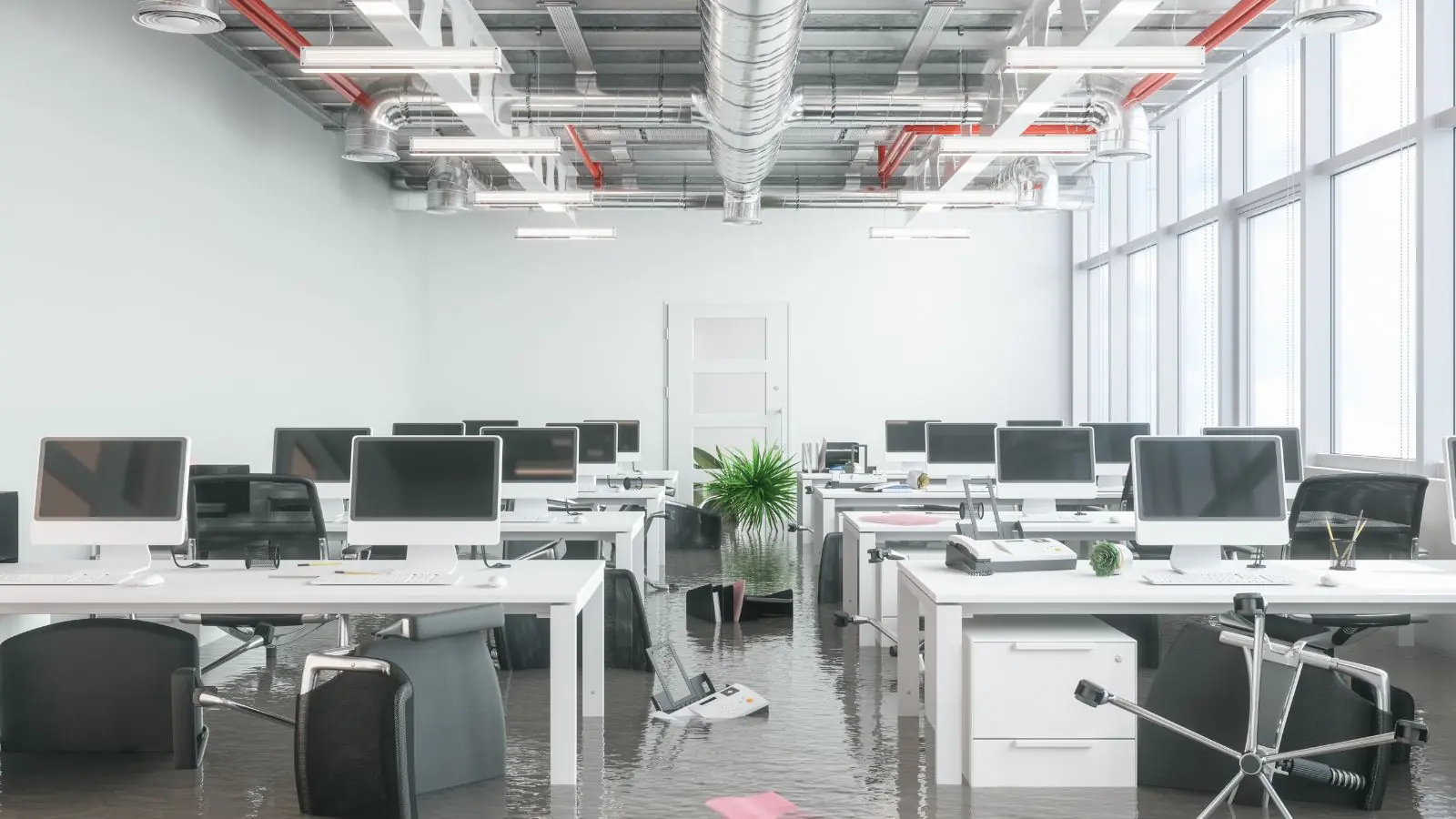
Commercial water damage restoration means getting water out of an office, shop or multi-unit building, drying the structure and finishes, and cleaning what the water reached. A ruptured supply line in a strip-center suite, a sprinkler line that lets go over a ceiling grid, or an overflowing restroom in an office all qualify. The crew works to a plan that also protects neighbors, shared walls and your schedule.
If water is moving right now, stop the source if you can reach the shut-off, keep people out of wet areas, and call (818) 337-2642. Dispatch runs 24 hours a day, including nights and weekends.
How commercial water losses start in and around West Hills
Most losses in this area come from ordinary building systems, not dramatic weather. Supply lines to restroom fixtures and break-room sinks fail at fittings. Roof drains and scuppers clog with debris and let rain pond on flat roofs, then find a seam. Condensate lines from rooftop air conditioning units back up and drip into the ceiling space. Sprinkler piping can also leak at a joint or discharge when a head is struck.
The building type changes the problem. In a single-story strip center the water usually runs sideways along a shared wall into the next suite. In a two-story office or apartment building it runs down, so the unit below gets wet before anyone upstairs notices. Knowing which direction the water traveled tells the crew where to probe first.
What a commercial loss looks like, and what it means
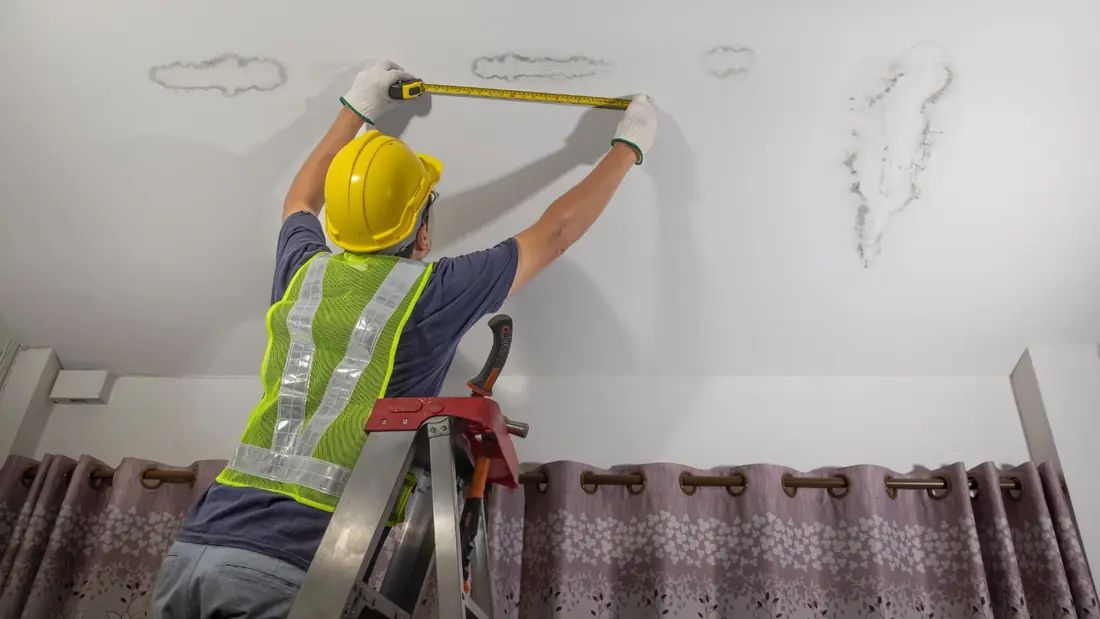
Look up first. Ceiling tiles that sag, stain brown or drip are the usual early sign of a supply or drain leak above the grid. A tile that is only damp today can be a soaked tile by morning, because the insulation or duct wrap above it holds water and releases it slowly.
Then look down. Carpet tile that curls at the seams, a floor that feels cool and damp, or adhesive that smells sour points to moisture under the covering. On a concrete slab, water often hides below the finish and keeps wicking upward for days. Meters and infrared imaging show the wet area that the eye misses, so the crew is not guessing.
First-hour safety steps in a shared building
Do these only if it is safe, and do not wait on the property manager to start them.
Find the shut-off
Close the suite's supply valve or the building's main if you know where it is. For a sprinkler line, call the property manager or building engineer, who knows the riser valve.
Mind the electricity
Cut power to wet areas only if the panel is dry and reachable. If water is near outlets, ceiling lights or the panel, stay back and call the utility or 911 before calling the restoration line.
Clear people and valuables
Move staff, customers and tenants out of wet or sagging areas. Lift files, electronics and stock onto desks or shelving, and keep foot traffic off soaked ceiling tiles.
Photograph and notify
Take wide and close photos before anything moves. Tell the property manager or landlord right away, since neighbors and units below may be affected.
Who is responsible: tenant, landlord or association
In a leased suite, your lease usually decides who handles the building shell, the plumbing behind the walls and the tenant improvements inside. In an HOA or condo property, the CC&Rs usually divide common areas from individual units. Read both before you authorize work, and ask the property manager who is directing the response.
We cannot tell you which party owes what, and we do not interpret leases. What we can do is document the affected rooms, separate the damage by area, and keep written notes the property manager and the insurers can use. Questions about lost income or a closed storefront go to your insurer, not to the restoration crew.
How the work is done in an occupied space
The first job is extraction. Extraction units pull standing water off slab and carpet tile, and loose tiles can be lifted for drying. That stage is covered in more detail on the emergency water removal page. Wet carpet pad, ruined ceiling tile and soaked insulation are removed as debris.
Drying follows. Air movers push dry air across surfaces, LGR dehumidifiers pull moisture from the air, and moisture meters track progress daily until readings reach the dry standard for that material. The general method is described on the water mitigation page. In an occupied suite, equipment is placed to keep walkways and exits clear, and cords are routed to avoid trip hazards.
Affected areas can be separated with containment barriers and HEPA air scrubbers where dust or odors would drift into working space. After drying, the water damage cleanup stage sanitizes surfaces and deodorizes. Noisy demolition can be scheduled after hours to cut disruption, which is worth asking about up front.
Materials that behave differently in commercial buildings
Ceiling tile and grid
Mineral-fiber tiles that got wet usually come out, because they sag and stain. The metal grid above them can often be dried in place and kept. Tiles in clean, undamaged sections stay up.
Carpet tile
Individual tiles lift out, so the crew can dry the slab underneath and replace only the damaged squares. Matching dye lots can be a problem on older installations.
Slab floors
Concrete holds moisture and releases it slowly. Meter readings on the slab, not how the surface feels, tell the crew when floor finishes can safely go back down.
Shared and demising walls
Water crosses to the next suite through the base of a shared wall. Moisture mapping on both sides shows how far it went, and neighbors need to be told early.
| Loss type | First practical step | Who to contact |
|---|---|---|
| Restroom overflow or supply line failure | Close the fixture shut-off, then call for extraction | Property manager, then the restoration line |
| Wet ceiling tile from a roof drain or condensate line | Clear people below, catch drips, photograph tiles | Building engineer or landlord, then the crew |
| Sprinkler line leak or discharge | Do not close valves yourself unless told how | Property manager or riser contact |
| Water crossing into a neighboring suite | Notify neighbors and the landlord immediately | Property manager, then the crew for both units |
What drives the cost of a commercial water job
No honest number exists before someone sees the space. Five factors move the total. One is the water category, clean supply water or contaminated drain water. Others are the area and number of suites affected, the materials involved (carpet tile, acoustic ceiling, drywall, slab), the days of drying equipment the readings call for, and any after-hours or phased-access scheduling. Rebuilding finishes is a separate scope.
For your own figure, call (818) 337-2642 and tell the dispatcher about the space, what got wet and when it started. Scope and price are explained before any work begins.
Insurance and documentation for commercial losses
Burst or failed lines that release water suddenly are often covered by property policies, while slow seepage and neglected maintenance often are not. Flood is usually excluded and needs its own coverage. Commercial policies vary widely, so read yours and ask the insurer before you settle on a scope.
Good records help every party. Photograph the damage before it is touched, keep a dated log of calls, and hold on to damaged items until the adjuster has seen them. The property manager and each insurer will each want to see the same facts, so one clear set of notes saves time.
Mistakes to avoid in a shared building
- Waiting a day to tell the landlord, which lets water reach the unit below.
- Running fans over wet tile without finding the source above the grid.
- Replacing finishes before slab and wall readings are dry.
- Throwing out damaged stock or fixtures before the adjuster has seen them.
- Assuming the lease answers who pays without reading it.
West Hills facts that affect commercial losses
West Hills sits between Chatsworth to the north, Woodland Hills to the south and Canoga Park to the east, so a building here often shares a wall, a roof line or a management company with property in a neighboring community. If your landlord or association manages several sites, expect the same contact to coordinate the response.
LADBS, the city building department, keeps an Express Permits bulletin of repair jobs that skip plan check. Its water damage and drywall items are worded for residential buildings, single-family homes and duplexes. A commercial suite is not on that wording, so ask the city building department whether your repair needs a permit.
The California Department of Insurance advises policyholders to keep a log of calls and to hold damaged items for the adjuster to inspect. Its guides also say the landlord's coverage does not extend to a tenant's belongings, so find out which policy protects your contents.
Source: City of Los Angeles Council District 12 (West Hills community page), City of Los Angeles Department of Building and Safety (Express Permits bulletin), California Department of Insurance (residential claims and insurance guides).
Water in your suite or common area?
Tell the dispatcher what is wet and who else shares the building. The crew plans around your hours.
Where we work around West Hills
The line serves commercial and multi-unit property in West Hills and next door in Canoga Park, Woodland Hills, Chatsworth, Winnetka and Calabasas. The method follows ANSI/IICRC S500, the published standard for water damage restoration. Managers and tenants can ask any company how it applies that standard.
Commercial water damage questions
Is emergency commercial water damage cleanup available in West Hills, CA?
Yes. The line dispatches to licensed and insured restoration professionals around the clock, including nights, weekends and holidays, plus same-day response when available. Call (818) 337-2642, say whether the space is a suite, a common area or a whole building, and tell the dispatcher what is wet and whether the source is stopped. The scope and price are explained first.
Who pays when the water came from the unit above or next door?
That depends on your lease, the CC&Rs and the insurance on each side, and we cannot decide it. What we can do is document the damage in each affected space and keep notes by area. Tell your landlord or property manager right away and let your insurer sort out responsibility.
Can you dry my space while my business stays open?
Often partly, depending on the size of the loss. Air movers and dehumidifiers can run in affected areas while the rest stays in use, and containment barriers can separate dust and noise. Some extraction and demolition work may be scheduled after hours. Ask about phasing when you call.
Do ceiling tiles always have to be replaced after a leak?
Wet or stained mineral-fiber tiles usually are, since they sag and stain and can hold moisture. The metal grid can often be dried and kept, and undamaged tiles elsewhere are left in place. The crew checks the space above the tiles with a moisture meter before deciding.
Does a business interruption claim go through you?
No. Lost income and closure questions belong to your insurer, and we do not make coverage decisions. We can provide dated photos and written notes of the affected area and the work, which help your adjuster and the property manager.
Do you handle after-hours access to a locked building?
The crew can work outside normal hours when the property manager or owner arranges access. Tell the dispatcher about key holders, alarm codes, elevator rules or loading dock hours when you call. Arranging that early avoids delays once the crew is on the way.