
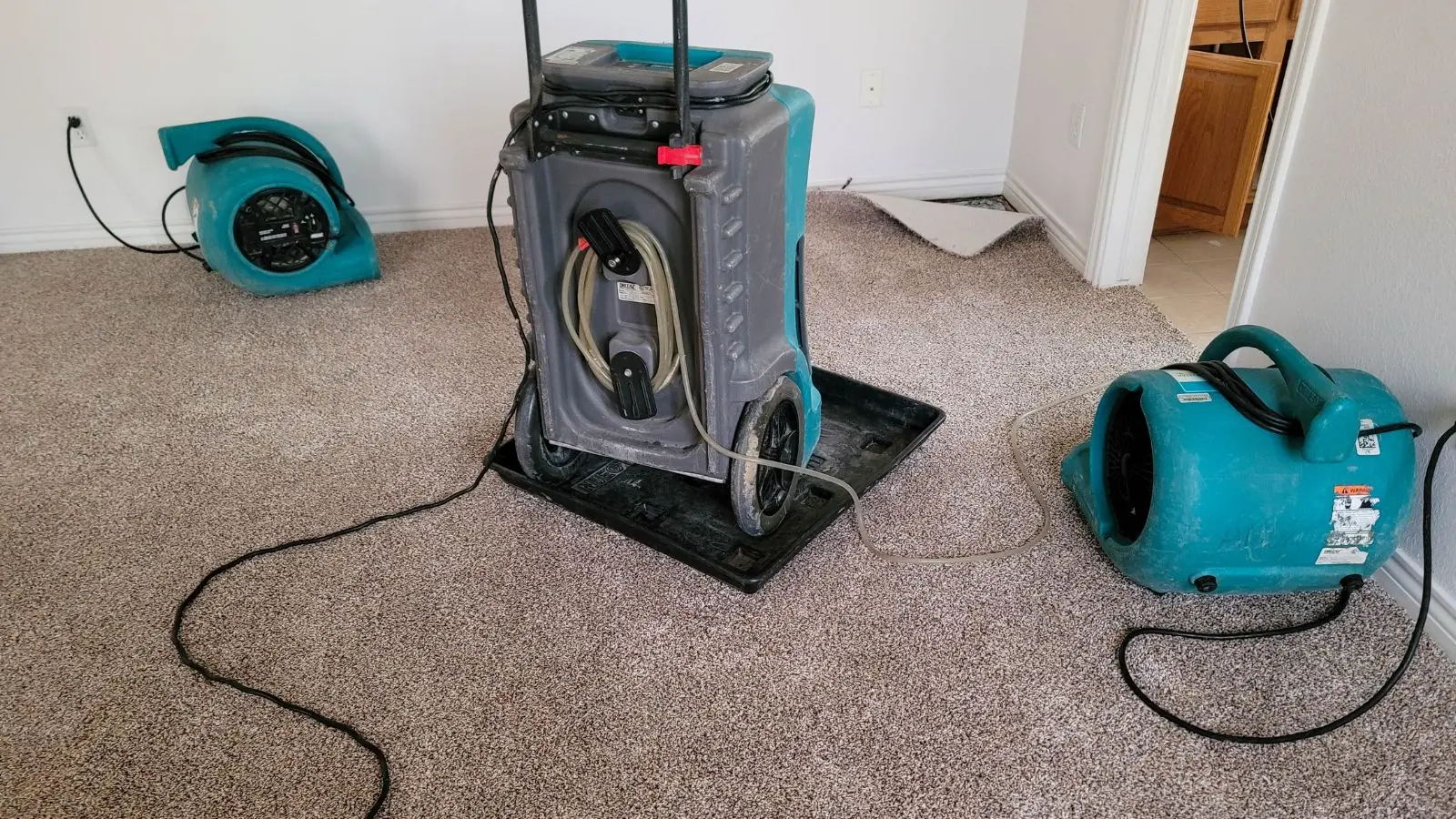
Structural drying is the controlled removal of moisture from the frame, floors, walls and ceilings of a building after water gets in, using measured equipment instead of open windows and hope. In West Hills, CA the work is its own discipline, with readings, targets and a written log, and it runs on our 24/7 line like any other emergency call.
Until the crew arrives, stop the water at its source, keep people off soaked floors near outlets, and leave wet wall cavities closed so nothing is disturbed. Photograph the damage, note the time the water started, and call (818) 337-2642.
How drying works in a West Hills house and climate
Most homes here are single-family houses with drywall over wood framing, a concrete slab or raised floor beneath, and carpet, tile or wood on top. Each layer holds water differently. Drywall soaks it up fast and lets go quickly, while framing lumber and slab concrete take in less but release it slowly. A drying plan has to treat them as different jobs.
Southern California is dry for much of the year, which sounds like an advantage. It is, but only partly, because the air inside a sealed, wet room can be far more humid than the weather outside. During storm weeks and marine layer mornings, outdoor air stops helping, so equipment carries the whole load.
It feels dry but the baseboard is cold and damp. Is the structure dry?
Not necessarily. A wall surface can feel dry while the paper-faced drywall behind the baseboard, the bottom plate and the insulation still hold water. Cold spots on a surface, a faint musty smell, paint that lifts at the bottom edge and floors that cup or buckle all mean moisture is still in the structure. Touch is the wrong test, which is why drying is measured.
First-hour safety steps before drying starts
Drying equipment is useless while water is still arriving, and wet buildings carry electrical risk.
Stop the source
Shut the fixture valve or the main supply. If water is coming through a roof or window, note where.
Mind the electricity
Wet outlets, a wet panel or a gas appliance in the water mean you stay out and phone the utility or 911 before anyone else. Cut power only from a dry panel you can reach without stepping in water.
Skip home fans for now
Do not run a box fan in a room with unknown or contaminated water. It spreads moisture and microbes into rooms that were dry.
Leave the walls alone
Do not drill or pull baseboard yourself. A crew decides where openings go so the cavity dries and the damage stays small.
Psychrometrics in plain words
Psychrometrics is the science of air and water vapor, and it explains why equipment is chosen the way it is. Warm air holds more vapor than cool air. Relative humidity is a percentage that shifts with temperature, so it can mislead. The crew also tracks grains per pound (GPP), the weight of water vapor in a pound of dry air, because that number does not change when the room warms up.
Dew point is the temperature at which air can hold no more vapor and water condenses on a surface. When a cool wall or window is colder than the dew point of the room air, moisture lands on it. Drying works by pulling the room's GPP well below what the wet materials are giving off, so water always moves from the material into the air.
That one-way direction is the entire idea. Compare the GPP of the air in the room with the GPP of the air outside and in an unaffected room. If the room air is not drier than the materials, nothing is drying, no matter how loud the machines are.
Setting the drying goal from unaffected material
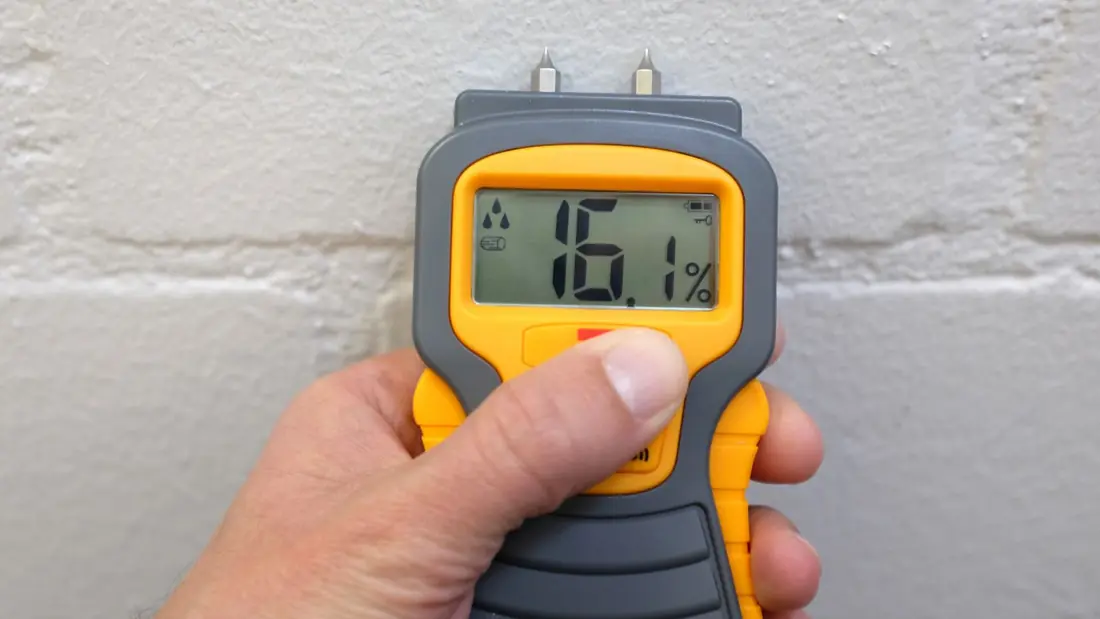
There is no single moisture number that means dry. A drywall reading on a meter and a lumber reading on the same meter are different scales. So the crew takes readings on the same kind of material in an unaffected part of your home, such as a wall on the opposite side of the house, and records them as the dry standard for that material.
The drying goal is then set at or near that dry standard. If your reference drywall reads low on a given day, that is the target for the wet drywall. Reference readings are also taken in the weather you actually have, which keeps the goal honest when the outdoor air is unusually dry or damp.
Moisture mapping before any machine is placed
Mapping comes first because it shows where water traveled. Water moves along baseboards, down wall cavities, under cabinets and through floor layers, so the wet area is almost always larger than the stain. The crew uses a thermal imaging camera to spot cooler, wetter zones, then confirms each one with a pinless or pin moisture meter.
Readings are marked on the surface or recorded on a sketch of the floor plan, with the date. That map becomes the baseline for every daily visit, and it is how you and your insurer can see the wet area shrinking instead of taking anyone's word for it.
The equipment and what each piece does
Air movers
High-velocity blowers that sweep air across wet surfaces. They break up the thin layer of saturated air that sits on a wall or floor so evaporation keeps going.
LGR dehumidifiers
Low grain refrigerant units cool the air to condense water out of it, then reheat it. They suit warm, moderately humid rooms and are the common workhorse on residential jobs.
Desiccant dehumidifiers
A drying wheel absorbs vapor from the air and is regenerated with heat, so it keeps working in cooler, very low humidity conditions where refrigerant units slow down.
Drying mats and panels
Fitted over hardwood or other flooring, they pull air through the material or draw moisture from underneath, in place of tearing a good floor out.
Injection and cavity drying
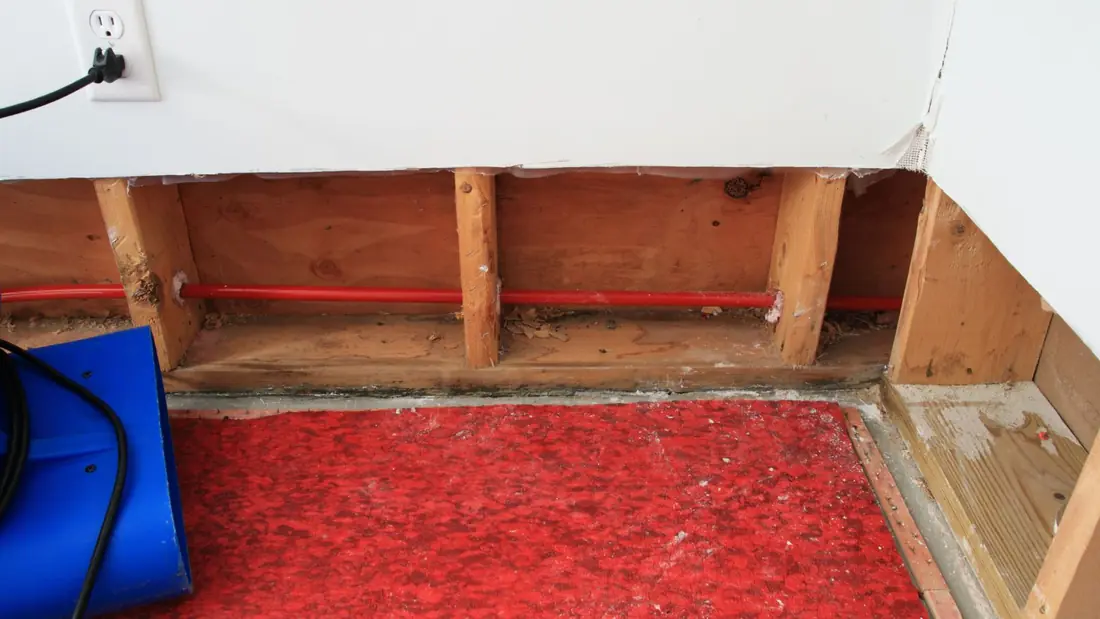
Small holes let warm dry air be pushed into a wall cavity or the space under cabinets. This reaches framing that surface airflow cannot touch.
Air scrubbers and containment
HEPA air scrubbers filter air during demolition, and plastic barriers keep the drying zone sealed so equipment only dries what it should.
| Condition | Usual choice | Why |
|---|---|---|
| Warm room, drywall and carpet wet | Air movers with an LGR dehumidifier | Efficient while the air is warm and humid enough for condensing coils to work |
| Cool room, dense wood, slab or very low humidity target | Desiccant dehumidifier added | Keeps pulling vapor when refrigerant units lose capacity |
| Wet cavity behind intact wall or cabinet | Injection drying with warm air | Moves air through a space surface fans cannot reach |
| Finished hardwood that can be saved | Drying mats with dehumidification | Dries the floor in place, see water damage repair if boards are replaced |
| Contaminated or dusty work area | Containment with HEPA air scrubber | Holds the air in one zone while material is removed |
How placement and containment fit together
Placement follows the moisture map, not a formula of one machine per room. Air movers are aimed to push air along a wall or floor in a circular flow, and dehumidifiers are placed so wet air returns to them quickly. Equipment crowded in one corner leaves the far wall wet.
Containment turns the wet area into a small, closed system. The crew seals doorways and vents with plastic, so the dehumidifier is not trying to dry the whole house. Temperature matters too. Warm air takes more vapor off the material, so the thermostat is often set higher than usual and kept steady, and a cooled space can stall drying.
Seal and isolate
Close the affected rooms off from the rest of the house with barriers and covered vents.
Place dehumidifiers
Set them to match the water volume in the room and keep their exhaust inside the zone.
Aim air movers
Direct air along walls and floors, with extra attention at corners and under cabinets.
Open cavities if needed
Remove baseboard, drill small holes or cut a flood cut only where readings call for it.
Recheck and adjust
Move or add equipment at each visit as the wet zone shrinks.
Daily monitoring and the drying log
Every visit repeats the same readings in the same spots: material moisture, room temperature, relative humidity and GPP, plus the air coming out of the dehumidifier. Those numbers go into the drying log with the equipment count and positions. A drop in the numbers confirms drying. A flat line says something is wrong, such as a hidden wet pocket or a machine in the wrong place.
The log also tells the crew when to stop adding equipment and begin pulling it. Rooms at goal are released, and equipment moves to rooms still wet. Because the daily record exists, it supports your insurance file if the cause of loss, the scope or the days of equipment are ever questioned.
When drying is finished
Drying is finished when every wet material has reached the drying goal set from your dry standard, and the readings stay there after equipment is switched off for a short check. It is not finished on a calendar date. A wall that reads dry on the surface and wet at the bottom plate has not met the goal.
Only then does rebuilding start. Painting or closing a wall over damp framing is how stains, odor and mold come back, which is why water damage repair waits for dry readings. If materials such as soaked padding are pulled out, carpet water damage restoration explains how that call is made.
Why homeowner fans and rented equipment often fall short
A household fan moves air but removes no water from it. Without a dehumidifier, the vapor goes into the room, the walls and the furniture, and the humidity climbs. Opening windows helps only when the outside air really is drier than the indoor air, which is not true on a foggy morning or in storm weather.
Rented machines have a different problem. They are usually sized by guess, placed by feel and never measured. Nobody records the dry standard, so the renter does not know when to stop, or whether a wall cavity is still wet. The equipment is only half of the job, and measurement is the other half.
If you are weighing a do-it-yourself approach for a very small, clean-water spill, you are not wrong to try. For anything that reached walls, insulation or subfloor, call early. For the first response on standing water, emergency water removal comes before drying.
What affects the cost of structural drying
- How many rooms, walls and floor layers are wet, and how far water traveled.
- Water category, because contaminated water adds removal, containment and cleaning steps.
- Equipment count, meaning blowers and dehumidifiers, and the length of the run.
- Dense or hard-to-reach materials such as slab, framing, hardwood and wall cavities.
- Special setups such as drying mats, injection drying or a desiccant unit.
Want your real number? Dial (818) 337-2642 and the crew walks you through scope and price ahead of the work.
Insurance and structural drying
Policies tend to respond to a sudden burst, not a slow seep, and floods usually need their own flood coverage. Ask your insurer which parts of the drying record it wants to see, and read your policy first. The log, the photos and the moisture map are the documents most worth keeping.
Common drying mistakes and how to prevent them
- Turning the heat off to save money, which slows drying.
- Closing a wet room's door with no dehumidifier inside.
- Pulling equipment because the surface feels dry.
- Painting or installing new flooring before readings reach the goal.
- Skipping the dry standard, so the target is a guess.
- Leaving a slow plumbing or roof leak unfixed, which restarts the wetting.
Prevention is mostly about catching water early. Check window corners and under sinks after storms, and call as soon as a stain grows. Early drying uses less equipment and less time than late drying.
West Hills conditions that shape drying
The closest NOAA station we could verify, Van Nuys Airport, shows 1991 to 2020 average temperature average temperatures of 57.2 degrees Fahrenheit in January and 79.0 in August. That means a winter house is often cool enough that a drying crew needs to add and hold heat, rather than rely on the weather.
The same station's June through September rainfall normals add up to only about 0.20 inches (0.07, 0.00, 0.01 and 0.12), so summer outdoor air is usually dry. Even then, a closed wet room needs equipment, because the air in it is not the air outside.
Source: NOAA NCEI 1991 to 2020 monthly normals for Van Nuys Airport (USW00023130).
Wet walls need numbers, not guesses
Call (818) 337-2642 any hour for same-day response when available.
Where drying fits in the larger job
Drying follows the first emergency steps and comes before repair. Start with water mitigation for the overview, and call about mold remediation if you already see dark growth. Crews serve Woodland Hills and Canoga Park too. The published ANSI/IICRC S500 standard is the reference for the drying process, and you can ask any company how it applies it.
Structural drying questions
Is emergency structural drying available in West Hills, CA?
Yes. Dispatch answers all night, on weekends and on holidays, and the crew goes out same-day when available. Arrival times are not promised. While you wait, stop the water, stay clear of electrical hazards and keep fans off if the water is contaminated.
How do you know when a house is dry?
Readings decide, not touch or the calendar. The crew compares each wet material to the dry standard taken from the same kind of material elsewhere in your home. When every reading reaches the goal and holds, equipment comes out. The drying log records each day's numbers, which also helps with an insurance file.
What are grains per pound and why do they matter?
Grains per pound (GPP) measures how much water vapor is in a pound of dry air, regardless of temperature. Relative humidity changes when the room warms or cools, but GPP does not. A crew uses it to confirm the air in the room is drier than the materials, so water keeps leaving the walls and floors.
Why not just run fans and open windows?
Fans move air but do not remove water from it, and open windows only help when outside air is drier than inside. Fog, storm weather and evening cooling make that untrue often. A dehumidifier takes water out of the air so evaporation from the structure can continue.
Do you dry walls without tearing them out?
Often, yes. Small holes and warm air can dry a cavity behind an intact wall, and drying mats can dry some floors in place. Wet insulation, soaked drywall or contaminated water usually mean removal. Readings and the water category decide, and the crew explains the scope and price first.
Do I need a dehumidifier if the weather is dry?
Usually yes. A sealed, wet room produces its own humid air, and outdoor dryness does not reach it unless it is brought in. Dehumidifiers also pull moisture on cool or foggy days. Ask the crew to show the GPP of the room air against the outside air.