
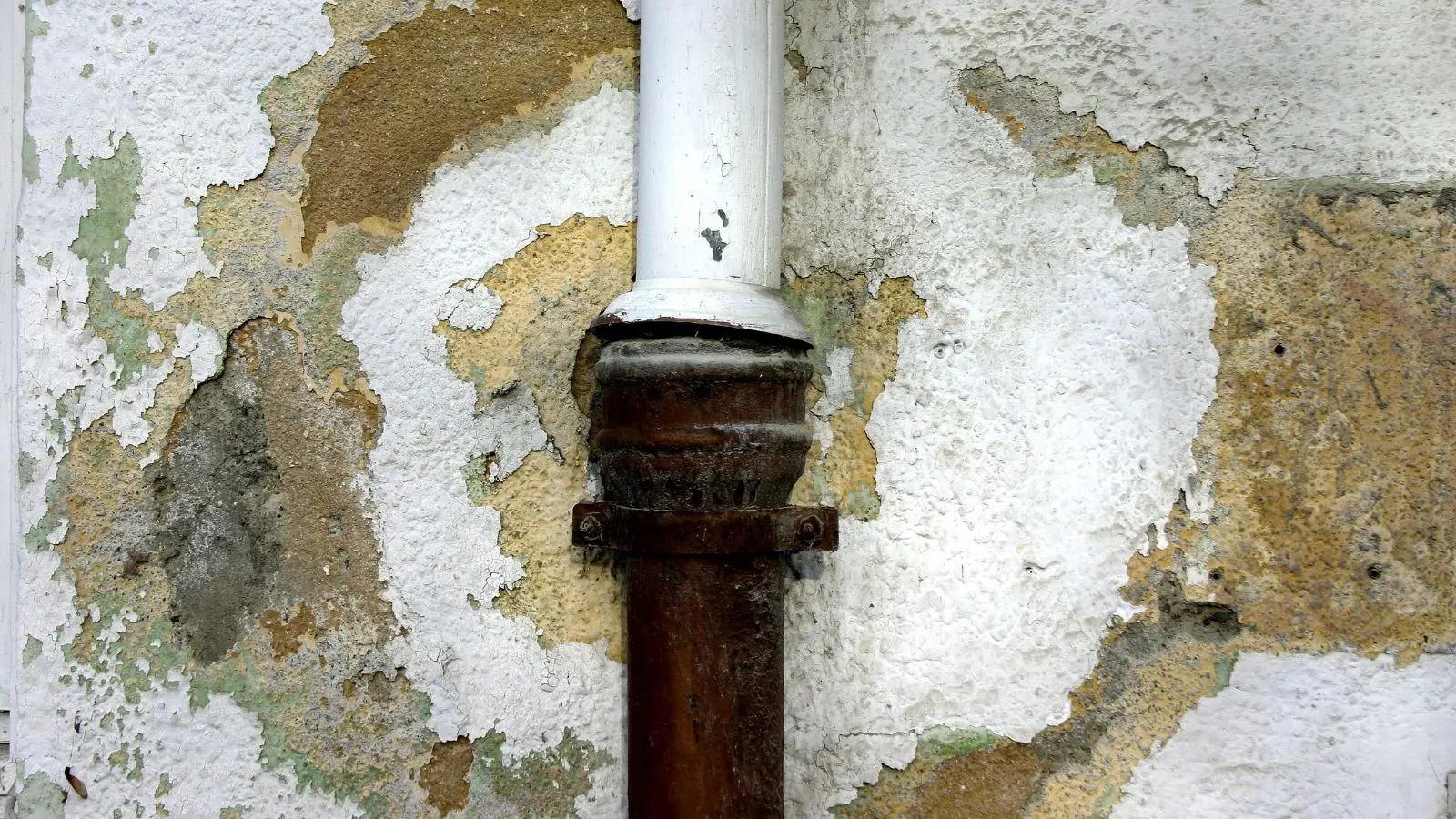
Drywall is a gypsum core pressed between two sheets of paper, and that paper is what makes drywall water damage repair different from other materials. Wet gypsum goes soft and crumbles, and the paper feeds mold if it stays damp. Some wet drywall can be dried and kept. Other board has to come out. In West Hills, CA a crew sorts one from the other with meter readings and a heat-sensing camera, then rebuilds the wall.
How drywall gets wet in a West Hills house
Water reaches drywall from above, from behind and from below. A roof or window that leaks during a storm soaks the ceiling first. A supply line inside a wall, a shower pan, a dishwasher hose or an air conditioner drain line wets the wall from behind. A flooded floor wets it from the bottom.
From the bottom, water climbs. Drywall acts like a wick, so the wet zone is usually taller than the stain you can see. That is why a stain at knee height can mean wet board above it.
The source matters for the repair, because a patch over a leak that is still running fails within weeks. The plumber or roofer fixes the leak first. Then the drywall decision starts.
Sagging, bubbling, brown stains: what the board is telling you
Sagging or bulging
The board is holding water or has lost strength. A bulging ceiling can drop without warning, so stay out from under it.
Bubbling or peeling paint
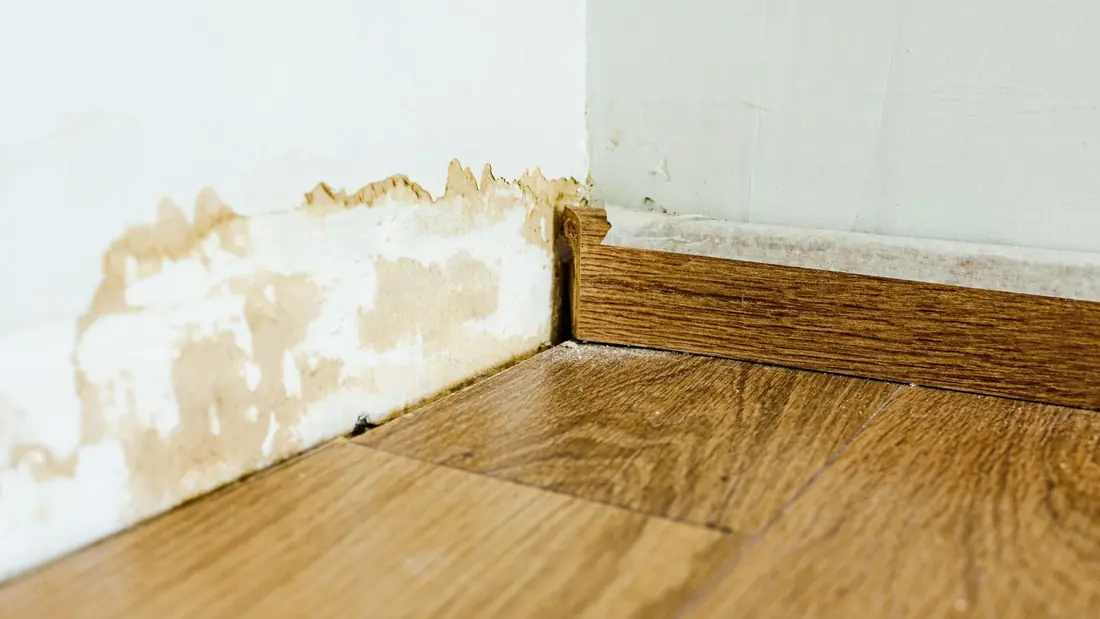
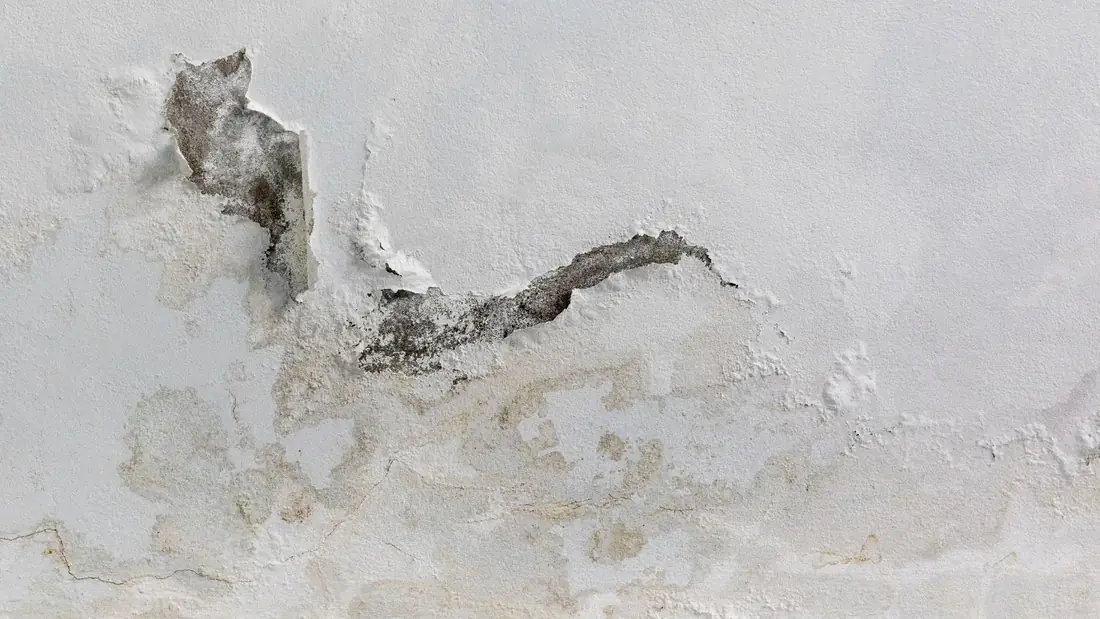
Water is behind the paint film. The board under it is usually wet, even if the surface feels dry.
Brown or tan staining
Dissolved tannins and dirt carried through the paper. A ring with a dark edge often means the area got wet more than once.
Soft or crumbling spots
Press gently near a screw or seam. If the board dents or flakes, the gypsum core has failed and the board is replaced.
Seams that ridge or tape that lifts
Swelling at joints shows moisture has reached the compound and tape, and the finish will not hold.
A musty odor
Smell with no visible growth often means damp material inside the wall. Meter it before anyone paints.
Safety steps before anyone touches wet drywall
Wet board can fall, and the wall may hide wires. Take these steps first.
Stop the water
Close the fixture valve or main valve for a plumbing leak. For rain, a tarp over the roof can wait until the storm passes.
Power and light fixtures
Do not switch on a ceiling light that holds water. Cut power at a dry panel, or call the electric utility or 911 if water reached wiring.
Keep clear of a sag
Never poke a bulging ceiling. Place a bucket below, move people out and call the restoration line.
Think before you cut
Homes of a certain age may have asbestos in ceiling texture or joint compound. Ask a contractor about testing before you disturb it.
Dry it in place, or cut it out?
Three questions decide it: what kind of water it was, how long the board stayed wet and whether the readings are falling. Firm board with no sagging, hit by clean supply-line water and caught within a day or so, may dry without coming out. Dirty water and weeks of dampness cannot.
| What you find | Usual call | Why |
|---|---|---|
| Clean water, short exposure, board firm, readings falling | Dry in place | Air movers and dehumidifiers can bring it back to a dry reading without removing it |
| Sagging, bulging or crumbling board | Cut out and replace | The gypsum core has lost strength and will not recover |
| Gray water or sewage touched the board | Cut out and discard | Porous board cannot be cleaned reliably, see flood damage restoration |
| Wet insulation behind the board | Remove both | Insulation holds water against the back of the paper |
| Foil-backed, vinyl-covered or double-layered board | Often cut out | Moisture cannot escape through the extra layer |
| Visible or suspected mold on the paper | Stop and assess | Testing and removal belong to mold remediation |
ANSI/IICRC S500 is the standard that sorts water by category, and any restoration company can say how its crews apply it.
How the cut line is decided
A flood cut is a horizontal cut made a set height above the floor, often on a wall that got wet from the bottom up. A measured cut follows the wet area itself, found by moisture readings. Neither is a habit. The line goes where the meter says the board is wet, plus a margin above it.
Read the wall
A meter and a thermal imaging camera mark the wet area and the highest wicking line.
Compare with dry board
Readings from an untouched wall of the same board set the target.
Cut above the line
The cut goes above the visible waterline and above the highest wet reading, usually to the next stud so the new board has framing to meet.
Open the cavity
Wet insulation is removed and the stud bay and bottom plate are metered.
Dry before closing
The cavity stays open with air movers running until readings reach the goal.
Cutting higher than the stain feels wasteful, but it is cheaper than reopening a wall later. Board that looks dry above the line can still read wet at the paper, and the crew checks it before choosing the height.
Equipment and drying goals before the wall is closed
Pin meters read the board itself, and pinless meters scan its surface. A thermal imaging camera shows cool, wet patches across a whole wall, and a hygrometer tracks the air. Air movers push dry air across the open cavity. LGR dehumidifiers remove the moisture from the room's air.
When the board is kept, small holes may be drilled so air can reach the cavity behind it. If the cut is made under category 2 or 3 water or near suspected mold, plastic containment barriers and a HEPA scrubber hold the dust in the work area.
How long until the wall is closed is set by the readings, not a promised number of days. Studs, bottom plates and insulation all have to reach the dry goal, and the drying log records each visit. For the broader drying plan, see water mitigation.
Taping, mudding, priming and painting the patch
New board is cut to the opening and screwed to the framing. Seams get paper or mesh tape, then joint compound in thin coats, each one feathered wider than the last and sanded smooth. Sanding makes fine dust, so the crew masks the room and uses dust control.
Primer comes next. Joint compound soaks up paint differently from the board around it, and a skipped primer leaves a dull patch that shows in raking light. A stain-blocking primer goes over any old stain that stays.
Texture is the hard part. Orange peel, knockdown and popcorn finishes are sprayed or troweled, and a good match comes from testing on a scrap and blending past the edge of the patch. Paint is usually applied to a full wall, corner to corner, because a patch of the same paint can look different from a wall that has aged. Baseboard and trim are reinstalled, caulked and painted last.
Stain or sag on your wall or ceiling?
Ring (818) 337-2642 at any hour. Tell the dispatcher the room, how big the mark is and whether the board feels soft, and you will hear whether it sounds like a dry job or a cut job.
Ceilings, walls and bathroom board are different jobs
| Location | What is different | What to expect |
|---|---|---|
| Ceiling | Water pools and the board is heavy when wet. Insulation sits on top. | Drain a bulge safely, remove board and wet insulation, and patch overhead |
| Wall | Water wicks up from a wet floor or arrives from a pipe inside the cavity. | Cut above the wet line to a stud, dry the bay, then finish |
| Bathroom or laundry | Moisture-resistant board is made for damp rooms, but it still fails after a real leak. | Replace failed board, check what sits behind tile and ask the plumber about the source |
Each of these ties into the broader rebuild on the water damage repair page, which covers flooring, cabinets and paint beyond the drywall itself. If the water left a smell or stained a whole room, water damage cleanup covers the tear-out and sanitizing first.
What changes the cost of drywall repair
- Area: a patch between two studs is a smaller job than a full wall or ceiling.
- Water category: dirty water means more board removed and more protection.
- Insulation and framing: wet batts and wet studs add drying time and equipment.
- Finish: matching a heavy texture or paint across a full room takes more labor than a flat finish.
- Access and height: high ceilings and stairwells need scaffolding or lifts.
Want your real figure? Call (818) 337-2642 with the room and the size of the damage, and the scope comes first, then the price, before anyone starts.
Drywall damage and your insurance
A burst line that soaks a wall overnight is treated differently from a drip that stained it for months, and flood damage is usually excluded unless you carry separate flood coverage. Photograph the board before anything is cut, keep the moisture readings and check your policy wording with your insurer.
Mistakes to avoid when drywall gets wet
- Painting over a stain. Primer hides the mark but not the wet board behind it.
- Closing the wall too soon, before the studs and insulation read dry.
- Cutting only at the stain edge, when wicking carried water higher.
- Skipping the source repair, which lets the new board get wet again.
- Cutting into old texture or compound without asking about asbestos testing.
Storm season and licensing for drywall work
At Van Nuys Airport, the closest NOAA station with published normals, June through September together average only 0.20 inch of rain, while October averages 0.48 inch and November 0.75. After a dry summer, the first storms test roofs that sat untouched, so a new ceiling stain in fall is worth tracing to the roof before anyone paints.
The Contractors State License Board lists drywall as its own classification, C-9. Ask whoever hangs and finishes your board which license they hold, and check it on the CSLB website.
Because Van Nuys is a Valley station and not a West Hills one, treat the rain figures as a guide. A crew checks your own walls with a meter, which is a better source than any average.
Source: NOAA NCEI 1991 to 2020 monthly normals, Van Nuys Airport. California Contractors State License Board classification list
Neighbors in Woodland Hills, Canoga Park and Winnetka call the same line.
Drywall water damage questions
Is emergency drywall water damage cleanup available in West Hills, CA?
Yes. The phone is staffed through the night and on Sundays, with same-day response when available. Call (818) 337-2642 if drywall is sagging, soaked or dripping. The crew can drain a bulge safely, remove wet board and insulation, and set drying equipment, then patch and paint once readings reach the goal.
Can wet drywall be saved?
Sometimes. Firm board that took clean water and was caught early may dry without removal while readings fall. Board that sags, crumbles or soaked in dirty water is cut out. The decision rests on a moisture meter and thermal camera, not on how the board looks.
How high is drywall cut after a leak?
The cut goes above the visible waterline and above the highest wet reading, usually to the next stud. Water wicks upward in drywall, so the wet zone can reach higher than the stain. The crew checks the paper and cavity before choosing the height.
How long before the wall can be closed up?
When the studs, bottom plate and insulation reach the dry goal on the drying log. That goal comes from readings on dry material in your own home, so no one can fairly promise a number of days in advance. Closing early can trap moisture.
Why does the new patch show through the paint?
Joint compound drinks paint differently from the board and texture around it. A primer coat evens that out. Matching texture and painting a full wall from corner to corner usually hides the repair better than touching up a spot.
What if I see mold on the drywall?
Stop and do not scrub or sand it. Mold needs moisture, and testing and removal follow ANSI/IICRC S520. See the mold remediation page. Questions about your health belong to a physician.